What bare concrete costs an industrial building
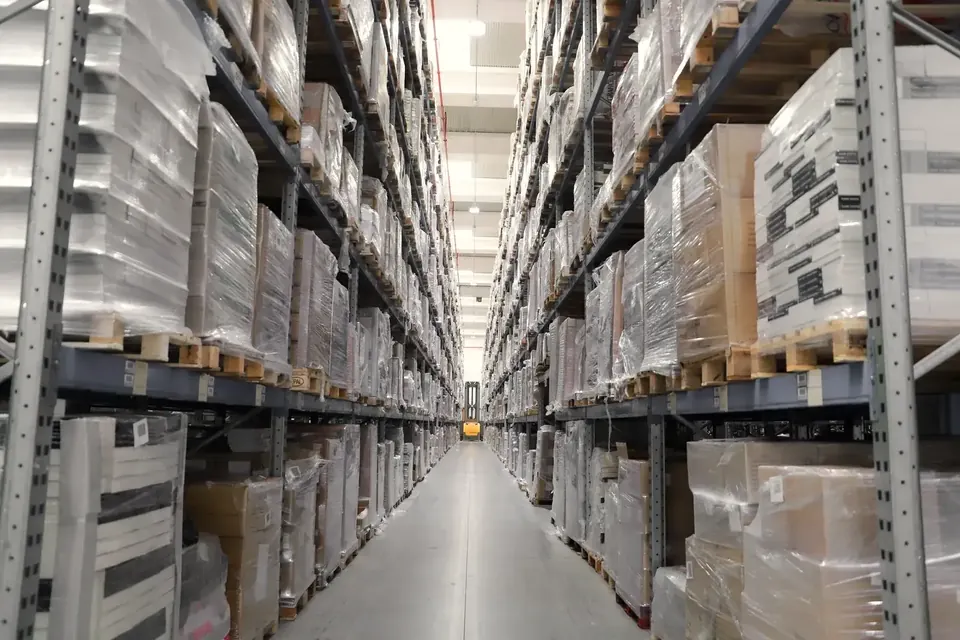
An uncoated warehouse slab is never really clean. The surface slowly abrades under traffic and releases a fine cement dust that settles on inventory, gets into bearings and coats every horizontal surface in the building. Oil and coolant soak in and leave dark, slippery patches. Joints chip a little more each time a hard wheel crosses them, and eventually the forklifts are bouncing.
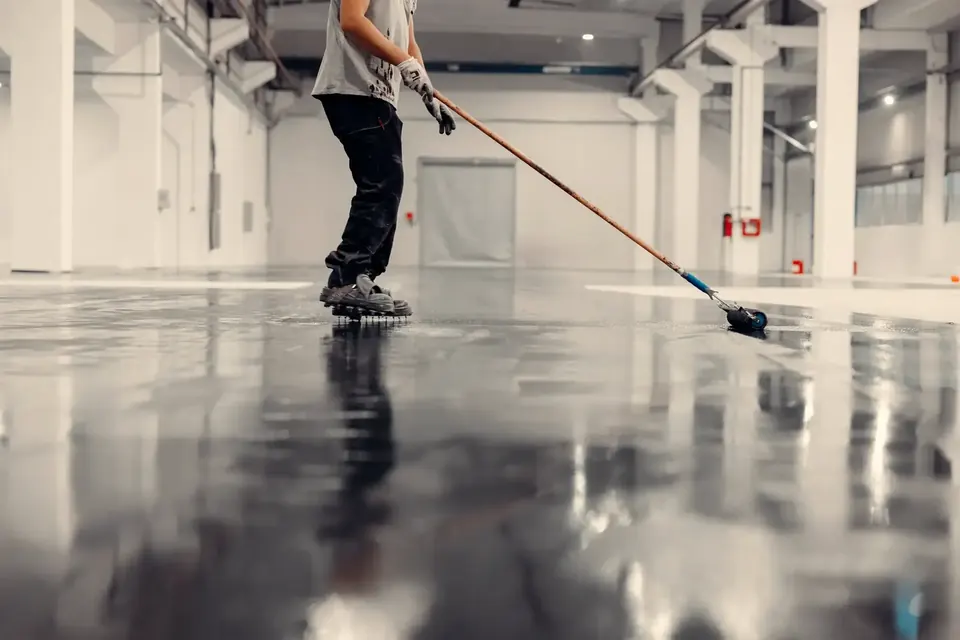
Coating the floor addresses all of that at once. A high-solids epoxy binds the surface so it stops dusting. The film is non-porous, so spills stay on top and can be wiped or scrubbed away. Filled joints give wheels a smooth path. And a light-colored, glossy floor reflects a good deal more light than grey concrete, which makes the whole space easier and safer to work in.
Waukesha has a deep bench of manufacturers, fabricators and distributors, and many of them operate in buildings where the slab has decades behind it. Those floors are almost always worth saving.
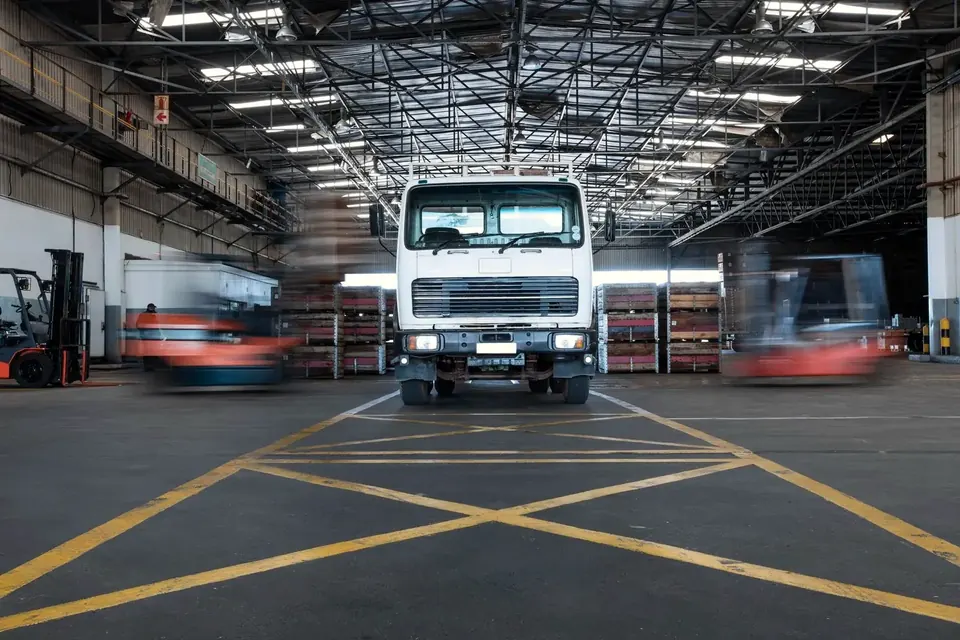
Operational benefits
- Dust control. Product, racking and machinery stay cleaner, and air quality improves.
- Brighter workspace. Reflective floors raise light levels without adding fixtures.
- Faster cleanup. Auto scrubbers work efficiently on a sealed surface, and spills do not stain.
- Smoother travel. Repaired joints and a continuous surface are easier on forklift tires, loads and operators.
- Clear traffic patterns. Aisles, pedestrian lanes and staging zones are marked in coating, not tape.
- Chemical resistance. The right topcoat withstands oils, coolants, battery acid and cleaning agents.
Industrial systems we install
High-build epoxy
Two coats of 100-percent-solids epoxy over a primer. It is the general-purpose choice for storage, light manufacturing and maintenance areas.
Epoxy with urethane topcoat
Adds a harder, more abrasion-resistant and chemical-resistant wear layer. We recommend it for forklift aisles, production lines and anywhere with frequent spills.
Broadcast and slurry systems
Sand or quartz is built into the epoxy to create a thicker, textured floor for wet processing, wash bays and ramps.
Fast-cure polyurea and polyaspartic
For facilities that cannot shut down for long. These cure in hours and work on cold slabs. See polyurea floor coatings.
Line striping and safety marking
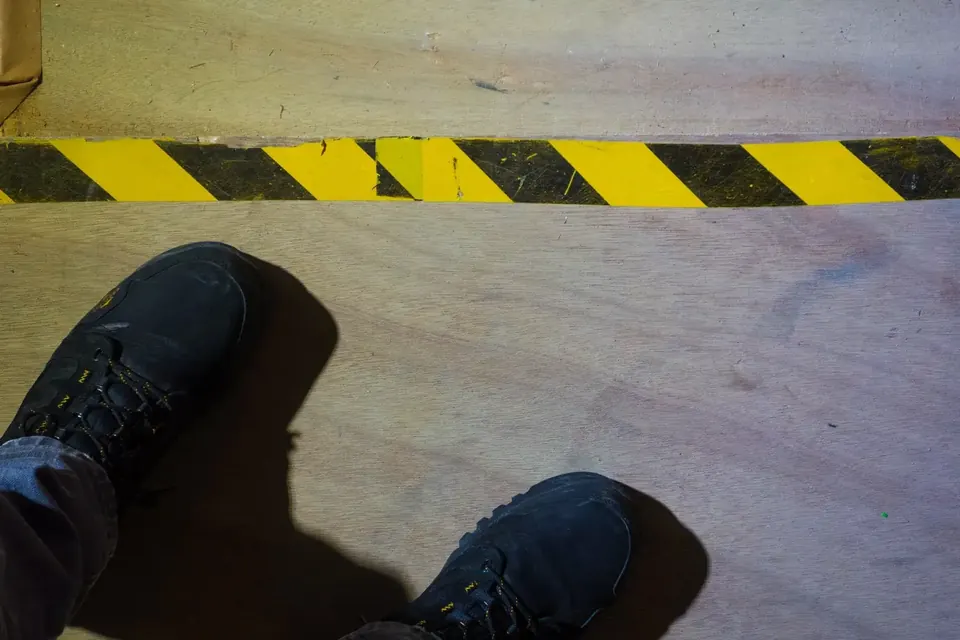
Aisle lines, pedestrian walkways, hazard zones, dock numbers and floor stencils, installed in durable coating and sealed.
Joint and crack rebuilding
Spalled joints are cut back and rebuilt, then filled with a semi-rigid material that supports wheel edges while allowing some movement.
Where these floors go
Distribution and storage buildings are the obvious case, but the same approach serves machine shops, fabrication floors, assembly areas, automotive and fleet service bays, aircraft hangars, mechanical rooms, loading docks and cold storage anterooms.
Each has its own emphasis. A machine shop needs resistance to cutting fluids. A fleet garage needs a floor that handles hot tires, brake fluid and constant washing. A hangar needs a bright, clean surface that makes dropped hardware easy to spot. A dock needs impact resistance and texture where rain and snow blow in. We ask a lot of questions at the walkthrough so the specification matches the work.
How an industrial project is carried out
- 01
Survey
We map the floor: square footage, joint layout, damage, contamination, moisture and existing coatings. We also note traffic routes and what cannot be moved.
- 02
Phasing plan
The floor is divided into zones that fit your operation. Some facilities prefer one shutdown week. Others need a bay at a time over several weekends.
- 03
Shot blasting or grinding
Large open areas are typically shot blasted, which cleans and profiles in one pass. Edges, tight spots and thinner systems are diamond ground.
- 04
Degreasing and repair
Oil-saturated areas are treated so the primer can bond. Joints, cracks, bolt holes and impact damage are rebuilt.
- 05
Coating application
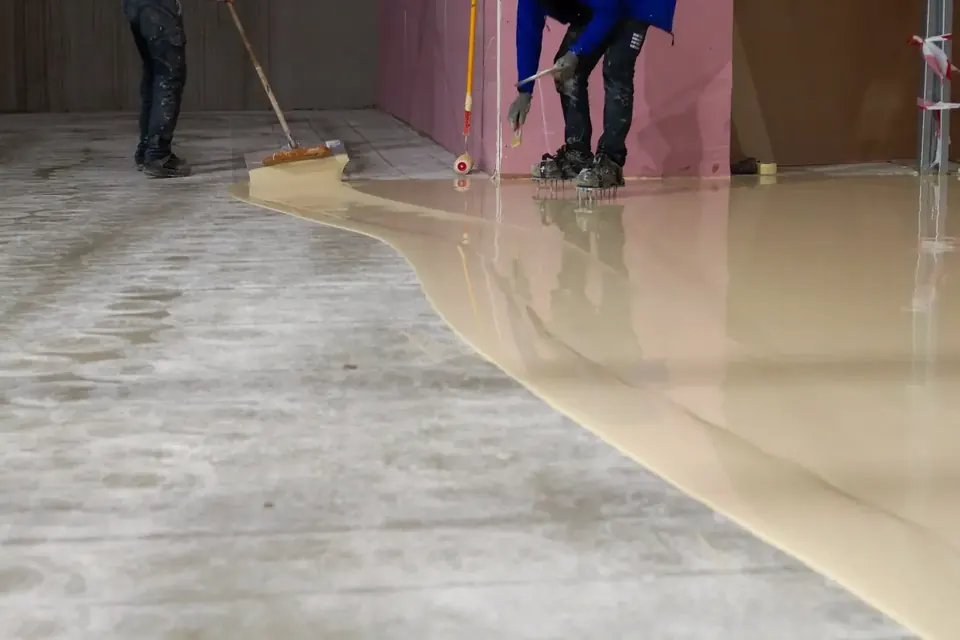
Primer, build coats and topcoats are applied by squeegee and roller, with any aggregate broadcast between coats.
- 06
Striping and release
Lines and markings go on last. Each zone is released with a written schedule for foot, cart and forklift traffic.
Why industrial coating is specialist work
The equipment alone puts this beyond a maintenance crew. Ride-on grinders, shot blasters and industrial vacuums are what make it possible to prepare thousands of square feet in a shift, and preparation is where an industrial floor succeeds or fails.
Material selection is the second reason. The wrong resin under a battery charging station or a parts washer will soften and stain in months. We look at safety data for the chemicals you use and specify topcoats to match.
Then there is the pace. Two-component resins have a limited working time, and coating a large bay means several people mixing, pouring, spreading and back-rolling in step. Lap lines, thin spots and trapped air are what you get when that goes wrong. A practiced crew avoids them.
Industrial floors in a cold climate
Dock doors are the weak point of any Wisconsin warehouse floor. Trailers bring in snow and salt, the doors stand open, and the slab near them cycles through freezing and thawing all winter. We often specify a more flexible, impact-tolerant system for the first bay inside the docks, with added traction.
Temperature matters for scheduling as well. In an unheated building the slab can sit near freezing for months, and conventional epoxy will not cure. Planning coating work for the warmer part of the year is ideal. When that is not possible, cold-cure polyurea and polyaspartic systems keep a winter project on track.
Finally, older slabs in this area were often poured without vapor barriers. Moisture testing is part of every industrial quote we write, because a failure across twenty thousand square feet is not something anyone wants to repeat.
What we need from you to keep the job on schedule
Industrial projects go smoothly when both sides plan ahead. These are the things we ask a facility to line up before we mobilize.
- A cleared zone. Pallets, loose equipment and stored materials need to be out of the area being coated. Anything that stays should be identified ahead of time so we can detail around it.
- Power and access. Large grinders and shot blasters draw a lot of power. We will confirm what your panels can supply or bring a generator. A dock door or drive-in door near the work area helps as well.
- Heat, in the cold months. If the building is normally unheated, we need to know. Slab temperature decides which resin we use.
- Controlled traffic. Barricades and signage keep forklifts and foot traffic off wet floors. One missed barrier can cost a full recoat of a bay.
- A single point of contact. Someone on site who can make decisions when an unexpected condition turns up under the old coating.
Maintaining an industrial floor
A coated floor still needs a cleaning program, and a good one extends its life considerably. Sweep or dust-mop grit daily in forklift lanes, because sand under a hard wheel is what wears through topcoats. Run an auto scrubber with a neutral cleaner on a regular schedule. Deal with oil, coolant and battery acid promptly instead of letting them stand.
Inspect joints and high-wear turns once or twice a year. Refilling a joint or recoating a single aisle is routine maintenance, and it is far cheaper than waiting until the concrete underneath is damaged again.
Warehouse and industrial flooring questions
How much downtime should we plan for?
A typical epoxy zone is out of service for three to five days from preparation to forklift traffic. Fast-cure systems can bring that down to a day or two. Phasing lets most facilities keep operating throughout.
Can you coat around racking and equipment?
Yes, although the best results come from clearing a zone. Where racks are anchored and staying put, we prepare and coat up to the base plates and detail around them.
Will the coating hold up to steel wheels and pallet drag?
Hard wheels and dragged pallets are tough on any floor. A urethane topcoat resists that abrasion far better than epoxy alone. In the heaviest lanes, a broadcast system with more thickness is the safer choice.
Our floor is soaked with oil. Can it still be coated?
Often it can. We degrease, grind or blast to reach sound concrete and use an oil-tolerant primer. Severely saturated areas sometimes need to be cut out and patched. We test bond in the worst spots before committing.
Do you fill control joints?
In traffic areas we recommend it. A semi-rigid joint filler protects the edges from chipping under wheels. In areas with little wheeled traffic, joints can be left open or simply sealed.
How long will the striping last?
Coating-based striping sealed under a clear topcoat lasts far longer than paint or tape. In heavy forklift lanes it will eventually wear and can be refreshed without redoing the floor.