What polyaspartic is, in plain terms
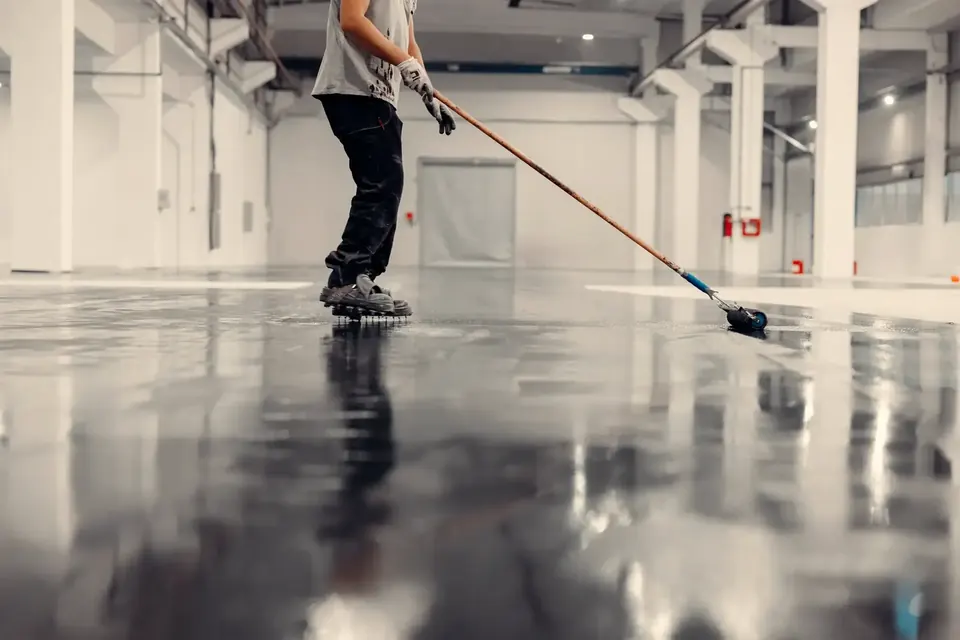
Polyaspartic is a two-component resin from the same chemical family as polyurea. It was developed as a protective coating for steel in bridges and rail cars, where it had to cure fast and survive weather. Flooring installers adopted it for the same reasons.
Compared with epoxy, three things stand out. It cures much faster, typically firm enough to walk on within a few hours. It is aliphatic, which means it does not turn yellow or chalky in sunlight. And it cures across a wide temperature range, including on concrete cold enough to stop epoxy completely.
It also has a thin, water-like consistency when mixed. That lets it soak into ground concrete and wrap tightly around decorative flakes, producing a clear, hard finish with very good abrasion resistance.
None of this makes epoxy obsolete. Epoxy is still the better choice for thick builds, self-leveling metallic floors and some damp slabs. What polyaspartic does is give us a faster, more weather-tolerant option, and on many projects the two are used together.
Where polyaspartic outperforms
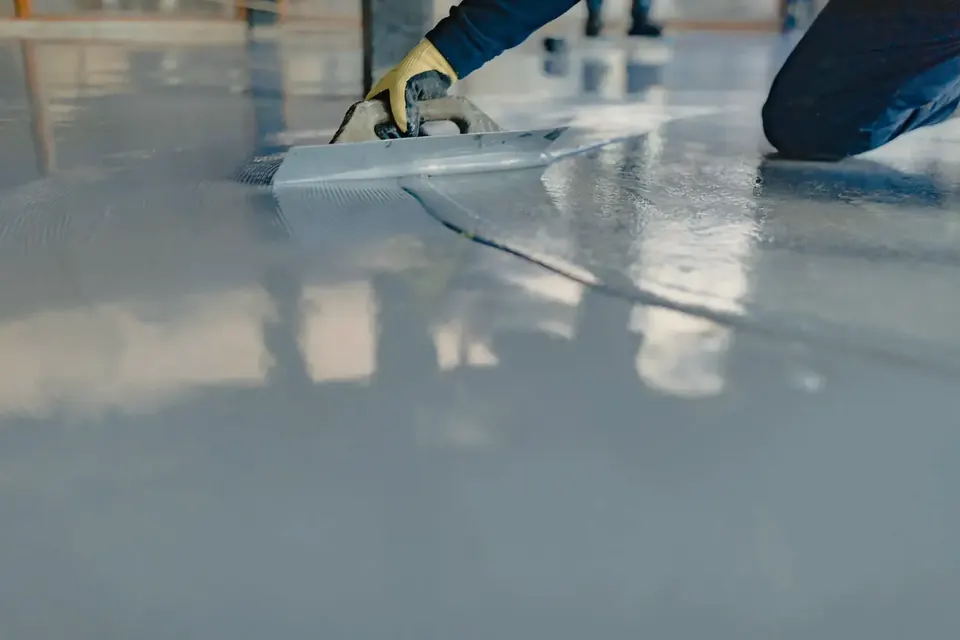
- Speed. Multiple coats can go down the same day. Many garages are prepared, coated and finished in a single visit.
- Quick return to service. Foot traffic the same evening and vehicles in a day or two, compared with several days for epoxy.
- UV stability. It holds its clarity and color near open garage doors, windows and outdoors.
- Cold-weather curing. It can be installed on slabs well below the 55-degree threshold that epoxy needs.
- Scratch and stain resistance. The cured film is harder and more abrasion resistant than typical epoxy topcoats, and it resists road salt, oil and most household chemicals.
- Flexibility. It has a little more give than epoxy, which helps it move with concrete through temperature swings.
How we use polyaspartic
As the clear coat over flake
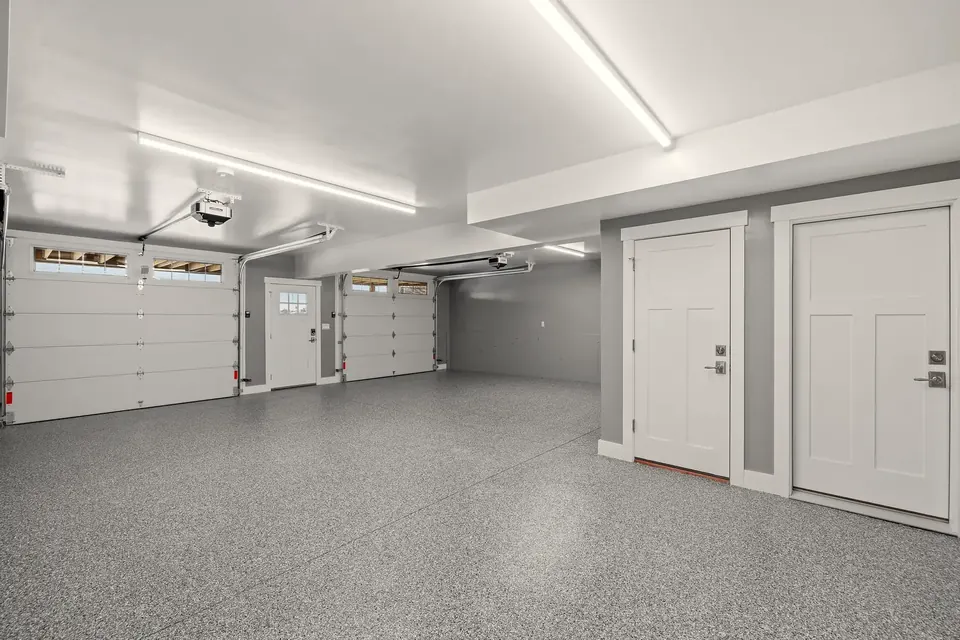
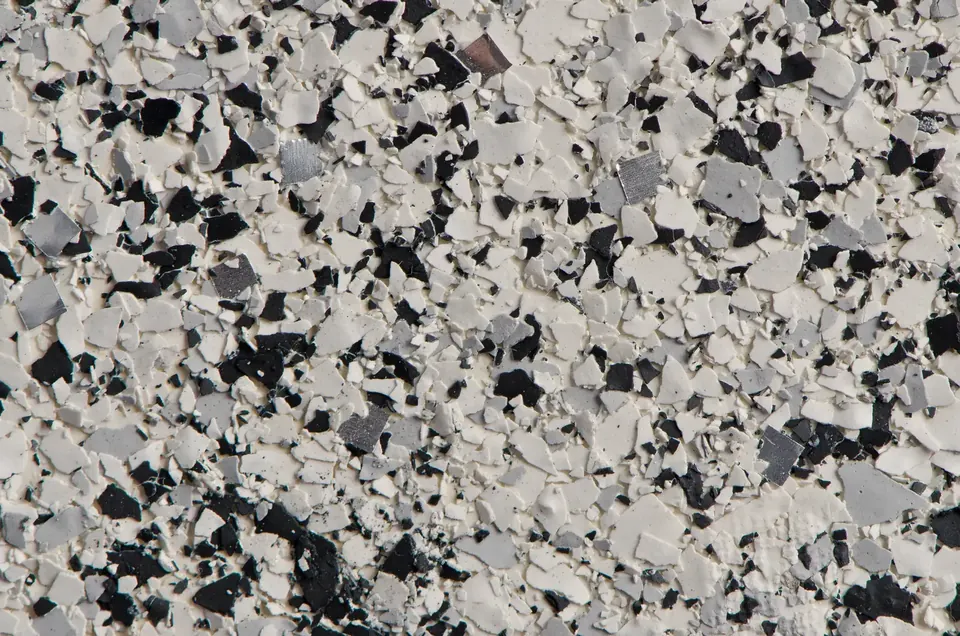
This is the most common role. A polyaspartic topcoat over a full flake broadcast gives garages a tough, glossy, non-yellowing finish. See decorative flake flooring.
As a complete one-day system
A fast-setting base coat, often polyurea, is followed by flake and a polyaspartic topcoat, all in one day. Our polyurea floor coatings page explains the base-coat side.
As a protective layer over epoxy
Where an epoxy color coat or metallic floor needs UV and scratch protection, a polyaspartic finish coat provides it.
As a fast commercial recoat
Retail aisles, restaurant floors and service bays that can only close overnight can be cleaned, abraded and recoated with polyaspartic before morning.
Outdoors
Because it tolerates sunlight, polyaspartic is the clear coat of choice for coated patios, stoops and porches.
Projects that suit it best
A polyaspartic system makes the most sense when time, temperature or sunlight is the deciding factor.
Residential garages. Especially when you cannot leave cars outside for a week, or when the project lands in the colder months.
Rental and for-sale properties. A quick turnaround keeps a closing or a move-in date on schedule.
Sunlit spaces. Garages with windows or doors that are often open, sunrooms, covered porches and showrooms with glass fronts.
Commercial floors on a deadline. Tenant improvements, shop bays and retail spaces that must reopen quickly.
Fleet and service areas. Places that need resistance to salt, fuel and oil and cannot give up a bay for long.
A one-day installation, hour by hour
- 01
Morning: grind and repair
The crew arrives early, grinds the slab, hand-details the edges and fills cracks and pits with a rapid-setting repair material that can be ground flush within minutes.
- 02
Late morning: base coat
The pigmented base is mixed in small batches and applied quickly. It begins to set soon after it is spread, so the team works in a planned pattern toward the exit.
- 03
Midday: broadcast
Flake is broadcast into the wet base to full coverage. Within an hour or so the base is hard enough to walk on with care.
- 04
Early afternoon: scrape and vacuum
Excess flake is collected, the surface is scraped smooth and every loose chip is vacuumed away.
- 05
Afternoon: polyaspartic clear coat
The topcoat is poured, squeegeed and back-rolled. Traction additive is included if you asked for it.
- 06
Evening: light foot traffic
By dinnertime the floor can usually be walked on. Vehicles wait another day or two, depending on temperature.
Why this resin belongs in experienced hands
Polyaspartic's speed is its selling point and its hazard. Depending on the formulation and the weather, an installer may have only fifteen to twenty-five minutes to place a batch before it begins to gel. Humidity shortens that window. There is no going back to fix a roller line or a missed spot once the material tightens up.
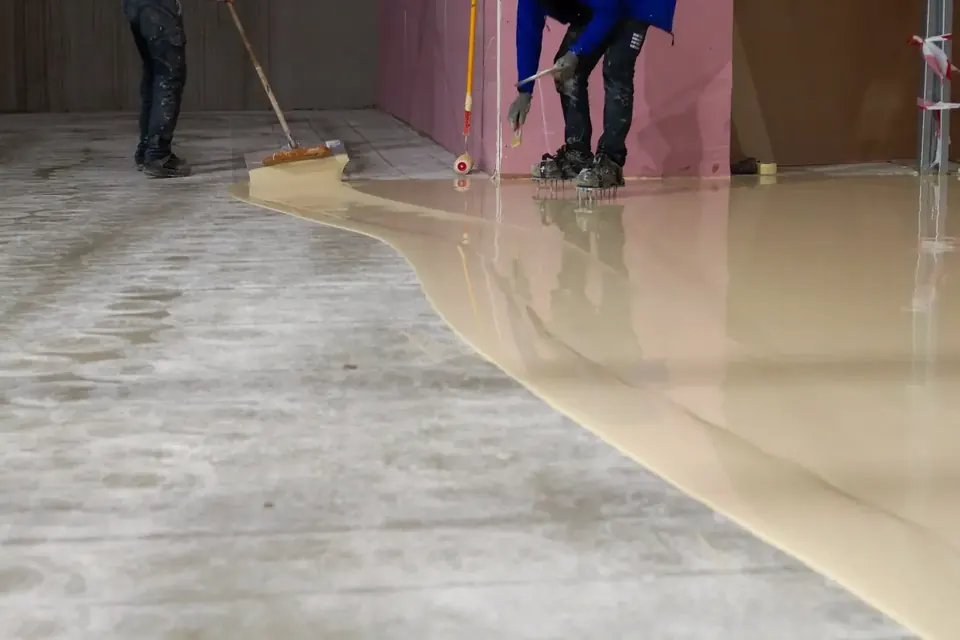
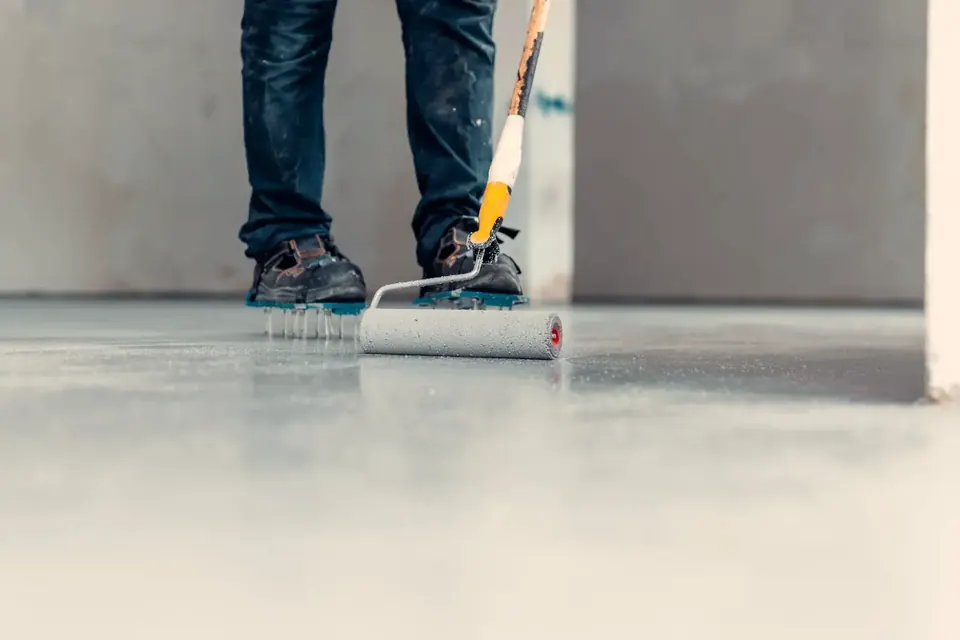
So the work has to be organized. Batches are sized to the area that can be covered in time. One person mixes, one spreads, one back-rolls, and everyone knows the path. The crew wears spiked shoes to move across wet material without leaving tracks.
Preparation cannot be shortened either. A fast cure does not help if the coating is sitting on unground, sealed or damp concrete. One-day floors that fail nearly always fail there, not in the resin. We grind every floor to the same standard whether the system takes one day or four.
Polyaspartic in a Wisconsin year
The cold-weather capability is what makes this resin so useful here. An unheated Waukesha garage is too cold for standard epoxy from roughly October into April. With polyaspartic, that same garage can be coated on a dry day in late fall, in a mid-winter thaw or in early spring. We still watch slab temperature and dew point, because frost or condensation on the concrete will stop any coating from bonding.
Summer has its own wrinkle. High humidity speeds up the cure, sometimes more than is comfortable. On muggy days we start earlier, mix smaller batches and choose a slower-setting formulation.
One limit to be straightforward about: polyaspartic is less tolerant of moisture vapor from below than some epoxy primers. On slabs that test damp, we put down a moisture-mitigating epoxy primer first and use polyaspartic over it. That adds a day, and it is the right call.
Polyaspartic and epoxy, side by side
People ask us to compare these two constantly, so here is the short version.
Cure time. Epoxy takes most of a day between coats and several days before vehicles. Polyaspartic can be recoated in an hour or two and driven on in a day or two.
Sunlight. Epoxy gradually ambers where sun reaches it, which is most noticeable at the garage door. Polyaspartic stays clear.
Temperature. Epoxy needs a warm slab. Polyaspartic cures in cold conditions, which opens up several more months of the Wisconsin calendar.
Thickness. Epoxy goes down thick and levels itself, which helps on rough concrete and is essential for metallic finishes. Polyaspartic is applied in thinner coats.
Wear. As a topcoat, polyaspartic is the harder and more scratch-resistant of the two.
Moisture. Specialized epoxy primers handle damp slabs better than polyaspartic applied directly to concrete.
Cost. Polyaspartic material costs more. Shorter time on site narrows the gap.
In practice the question is seldom one or the other. A very common build in our area is an epoxy or polyurea base chosen for the slab, flake for texture and appearance, and polyaspartic on top for durability and UV resistance.
Polyaspartic coating questions
Is polyaspartic better than epoxy?
It is better at some things: cure speed, UV stability, cold-weather application and scratch resistance. Epoxy is better at building thickness, self-leveling and handling certain damp slabs. The best floors often use both, each where it is strongest.
Can a garage floor really be done in one day?
For a typical two- or three-car garage in reasonable condition, yes. Heavily damaged slabs, old coatings that need removal or high moisture readings can push the job to two days.
How long does a polyaspartic floor last?
With sound preparation, a residential floor should last for many years. The topcoat resists abrasion well. If it ever dulls in traffic lanes, the surface can be abraded and recoated without starting over.
Is it slippery?
Smooth polyaspartic is slick when wet. Over a flake broadcast it has natural texture, and we can add a fine aggregate to the topcoat for more grip.
Does it smell?
Polyaspartics have a noticeable solvent-type odor during application that clears quickly as they cure. In a garage with the door cracked it is usually gone by the next day. For occupied interiors we choose low-odor formulations and ventilate.
Why does it cost more than epoxy?
The resin itself is more expensive, and it takes a larger, well-drilled crew to apply. Much of that is offset by fewer days on site, and for many owners the faster return to use is worth the difference.