How a metallic floor gets its look
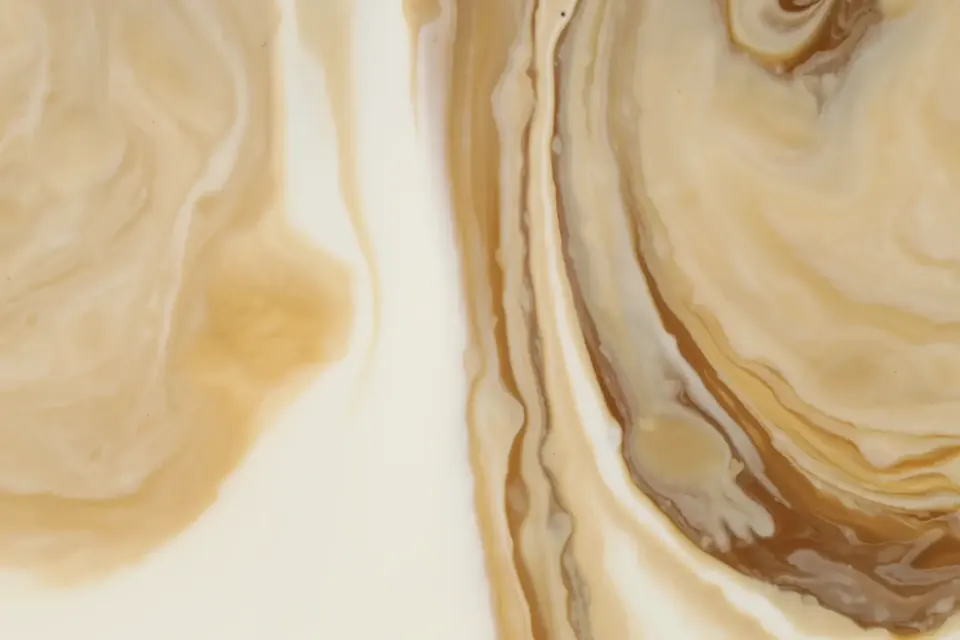
There is no metal in a metallic floor. The effect comes from very fine, mica-based pigments suspended in a clear, self-leveling epoxy. When the resin is poured and spread, those particles keep moving for a while. They follow the flow of the liquid, gather where it slows down and thin out where it runs. As the epoxy cures, the motion freezes in place.
The installer guides that process. Dragging a squeegee one way pulls long veins through the color. A roller creates soft, cloudy transitions. A light mist of solvent opens up craters and cells. Two or three pigment colors laid side by side will blend at their edges into something that looks like polished agate.
Because so much depends on timing and hand work, a metallic floor is closer to a finish trade than to painting. The pattern cannot be repeated exactly, which is exactly why people want it.

Why choose a metallic finish
- It is unique. Your floor will not match any other, including the sample.
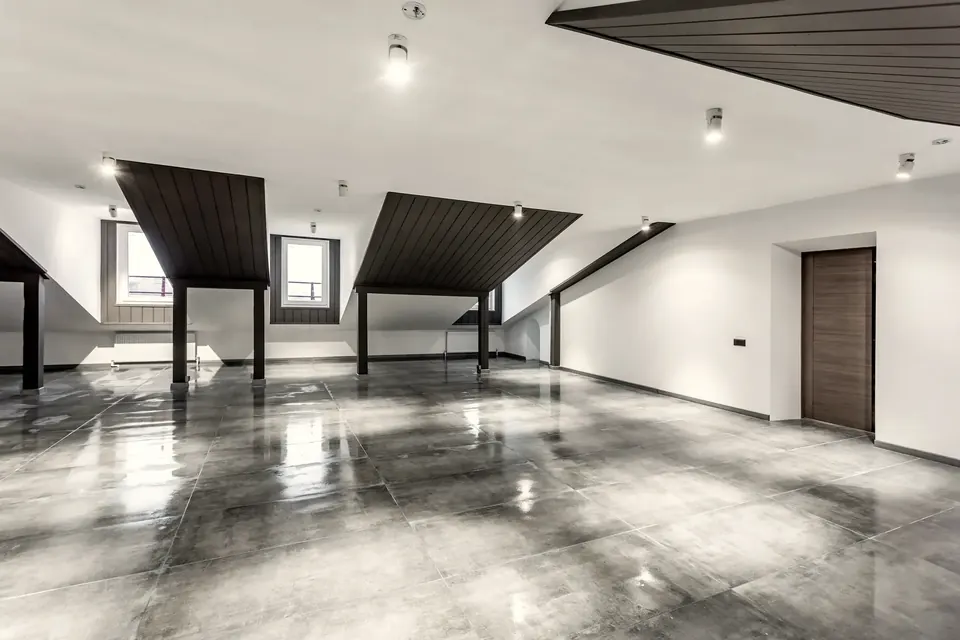
- It has real depth. Light reflects from pigment at different levels in the resin, so the surface seems to shift as you walk across it.
- It is seamless. No grout, no joints, no transitions across the room.
- It is tougher than it looks. Underneath the artistry is the same high-build epoxy used in commercial floors.
- It makes a room. A metallic floor can stand in for stone or polished concrete at a fraction of the weight and thickness.
- It cleans easily. A smooth, non-porous surface needs only a dust mop and a damp mop.
Color and style directions
Soft stone neutrals
Silver, pearl and warm grey worked gently for a honed-marble feel. This is the easiest metallic to live with and suits finished basements and offices.
Warm bronze and caramel
Copper, coffee and cream tones with more contrast. Popular for lower-level bars, wine rooms and restaurant dining areas.
Charcoal and gunmetal
Dark, dramatic and reflective. It looks spectacular in showrooms and garages built around a car collection. It also shows dust more readily, so it suits spaces that are cleaned often.
Blue and sea-glass tones
Flowing blues and greens that read like water. A natural fit for lake-country homes and spa or salon spaces.
Satin instead of gloss
Any of these can be finished with a satin urethane topcoat. You give up some mirror shine and gain a surface that hides fine scratches and footprints far better.
Where metallic floors work best
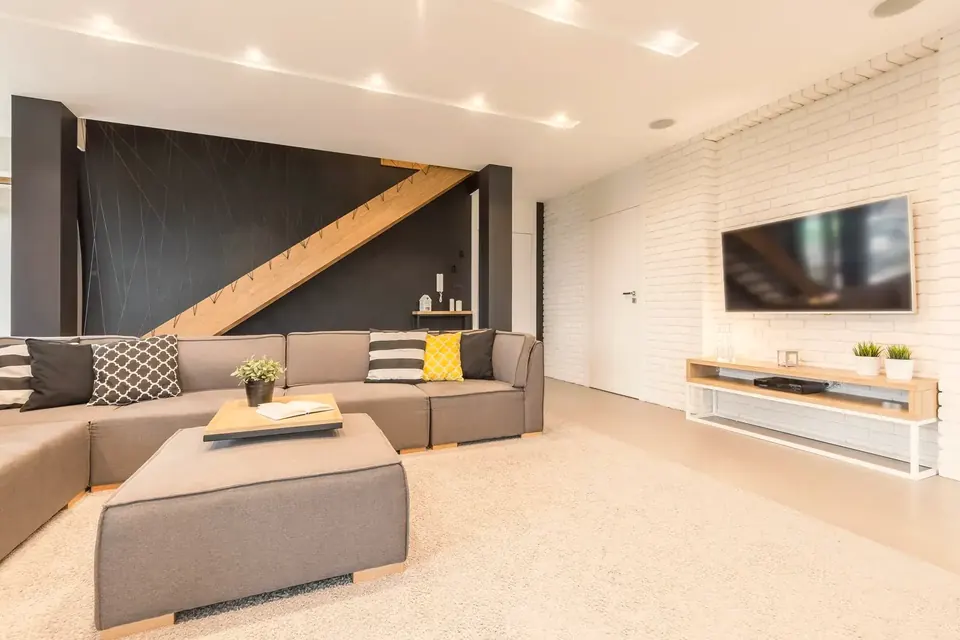
In homes, the most common request is a finished basement: a bar and lounge, a theater, a game room. Metallic floors also go into home offices, sunrooms on slab, and show garages where the vehicles deserve a backdrop.
In commercial settings, they belong where image matters and traffic is mostly on foot. Salons, boutiques, tasting rooms, galleries, hotel and office lobbies, and auto showrooms are all good candidates.
There are places we steer people away from metallics. A working garage with daily winter parking, a commercial kitchen or a machine shop will be hard on a smooth, glossy designer floor. In those rooms a flake system or a textured commercial coating is the smarter choice, and we will say so.
The installation, step by step
- 01
Design conversation
We look at the room, its light and its finishes, and narrow down colors with sample boards. We also talk honestly about how much movement you want in the pattern.
- 02
Meticulous preparation
The slab is ground flat and clean. Metallic epoxy is glossy and self-leveling, so it shows every flaw underneath. Cracks, divots and joints are filled and sanded smooth.
- 03
Primer coat
A pigmented primer, usually dark, seals the concrete and gives the metallics a uniform background. It also stops air from rising out of the slab and leaving bubbles.
- 04
Metallic pour
The pigmented clear epoxy is mixed in batches, poured in ribbons and worked with squeegees, rollers and brushes until the pattern is right. This is done in one continuous session.
- 05
Protective topcoat
After curing, the floor is lightly sanded and sealed with one or two coats of clear urethane or polyaspartic for scratch and UV resistance, with a traction additive if wanted.
- 06
Cure and care briefing
We go over cleaning, furniture pads and timing before you move back in.
Why metallics demand an experienced installer
More can go wrong with a metallic floor than with any other coating. If the slab is not sealed properly, air escapes during the pour and leaves pinholes. If batches are not mixed the same way, color shifts from one side of the room to the other. If the crew works too slowly, a visible seam forms where fresh resin meets resin that has started to set. If the room is too cold or too humid, the surface can blush or cure unevenly.
None of that can be touched up afterward. A flawed metallic floor has to be sanded and poured again. So the skill is in the setup: controlling temperature, staging materials, keeping dust out of the room, and having enough hands to finish the pour in one pass.
Experience also shows in restraint. It is easy to overwork a floor into mud. Knowing when to stop moving the pigment is what gives the pattern its natural look.
Metallic floors in Wisconsin homes
Most metallic floors we are asked about are in basements, and basements here need moisture testing before anything else. Clear, glossy resin is unforgiving of vapor pressure, and a blister in the middle of a showpiece floor is not acceptable. If the slab tests high, we use a moisture-mitigating primer beneath the system or recommend against a metallic in that room.
Temperature during installation matters as well. We want the slab and the air steady in the mid-sixties to mid-seventies while the floor is poured and cured, so winter projects need the heat left on and vents managed to keep dust from blowing across wet resin.
And think about the entry path. If the metallic floor is at the bottom of a stair that leads from the garage, grit and salt on shoes will scratch the finish over time. A good mat at the door and a satin topcoat go a long way.
Living with a metallic floor
Day to day, a metallic floor is easy. Dust mop it with a microfiber pad a few times a week, and damp mop with a neutral cleaner when it needs it. Rinse with clean water so no film dulls the shine. That is the routine.
What keeps it looking its best over the long run is preventing scratches. Put felt pads under chair and table legs and replace them when they wear. Use a rug or mat where people come in from outside or from the garage. Lift furniture when rearranging instead of sliding it. Keep pet nails trimmed if you have a large dog that likes to run laps.
Be realistic about gloss. A mirror finish will show footprints, dust and fine swirl marks in strong side light, just as a black car does. If that would bother you, choose a satin topcoat. The pattern still reads beautifully, and the floor is much more relaxed to own.
After several years, traffic areas may lose some clarity. The fix is a light sanding and a fresh clear coat, which takes a day or two and brings the whole floor back.
Metallic epoxy questions
Can I pick an exact pattern?
You choose the colors and the general character, such as soft and cloudy or bold and veined. The fine detail forms as the resin moves and cannot be scripted. Sample boards and photos set the direction.
Is a metallic floor slippery?
High-gloss resin is slick when wet, about like polished stone. A clear traction additive in the topcoat improves grip with little effect on appearance. We recommend it near exterior doors and bars.
Will it scratch?
All glossy floors show fine scratches eventually. The urethane or polyaspartic topcoat resists them well, and furniture pads and entry mats help. If the surface dulls after years of use, it can be re-coated to restore the shine.
Does sunlight affect the color?
Epoxy can amber slowly under strong UV. That is one reason we finish metallic floors with a UV-stable topcoat, and it is worth mentioning if the room has large south-facing windows.
How thick is the floor?
The full system is roughly the thickness of a few stacked credit cards. That is enough to self-level and create depth, but not enough to affect door clearances or stair heights.
Can a metallic floor go over tile or wood?
We install over concrete. Tile and wood are removed first, because any movement or grout pattern underneath would show through the finish.