
The floor is part of the first impression
People take in a commercial space quickly. Before they read a sign or talk to anyone, they have already registered whether the place feels clean and looked after. Flooring carries a surprising share of that judgment. Curling vinyl tile, stained carpet or patched concrete can make a well-run business look neglected.
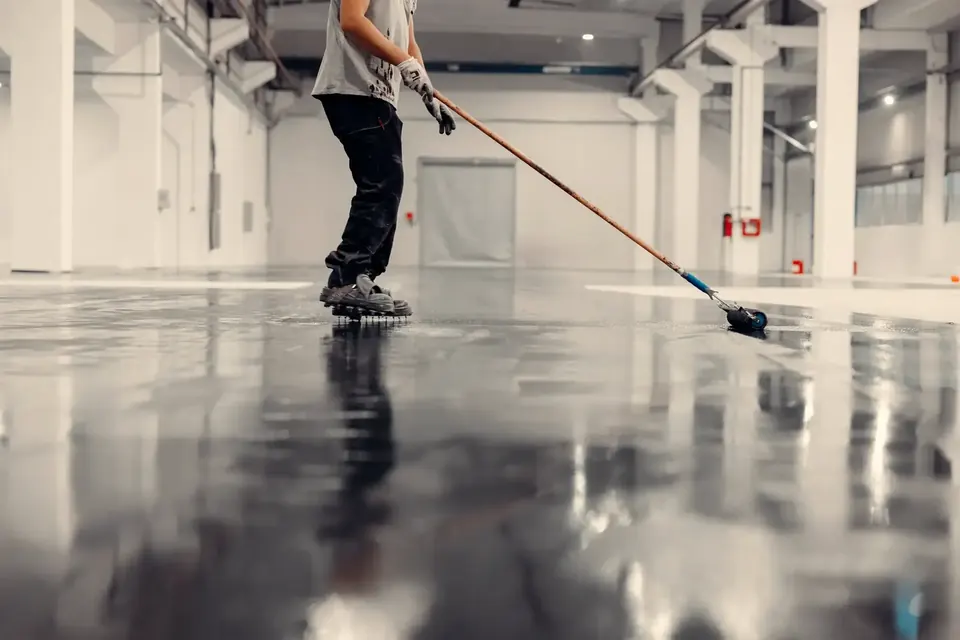
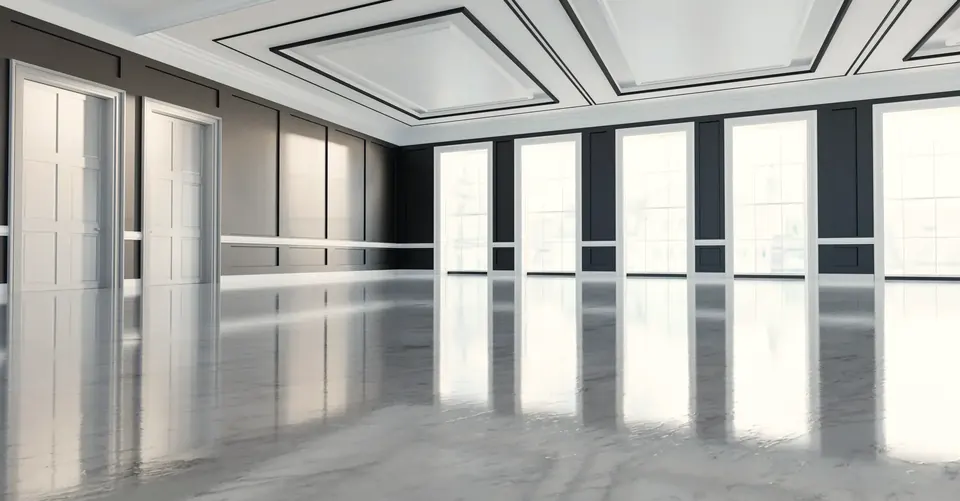
Resinous flooring fixes that at the source. It is poured and rolled in place, so it follows the room exactly and has no seams to lift or collect dirt. It can be bright white for a clinic, warm grey for an office, textured for a commercial kitchen or polished to a mirror for a showroom. And once it is down, the daily routine gets simpler: a dust mop, an auto scrubber, and done.
For owners and facility managers in Waukesha, the other half of the appeal is cost over time. A well-chosen system outlasts several rounds of sheet goods or carpet tile and does not need waxing or stripping.
What a resin floor does for a business
- Cleans fast. Non-porous surfaces release dirt, grease and salt without scrubbing.
- Resists wear. High-build coatings stand up to foot traffic, carts, chairs and pallet jacks.
- Supports hygiene. With no grout or seams, there is nowhere for bacteria to settle. Integral cove base can run the floor up the wall in wet rooms.
- Improves safety. Texture is adjustable from nearly smooth to aggressive, zone by zone.
- Brightens the room. Light, reflective finishes cut down on the lighting needed to make a space feel open.
- Carries your look. Colors, borders and logos can be built into the floor.
Systems we install in commercial space
Decorative quartz
Colored quartz granules locked in clear resin. Dense, textured and very hard-wearing, it is the standard for commercial kitchens, restrooms, locker rooms and other wet areas.
Flake broadcast
A quick-installing, forgiving finish for retail floors, break rooms, corridors and service counters. The pattern hides scuffs and tracked-in grit between cleanings.
Solid-color epoxy with urethane topcoat
A uniform color with a scratch-resistant satin or gloss finish. It works for offices, back-of-house areas, labs and light assembly.
Metallic and designer finishes
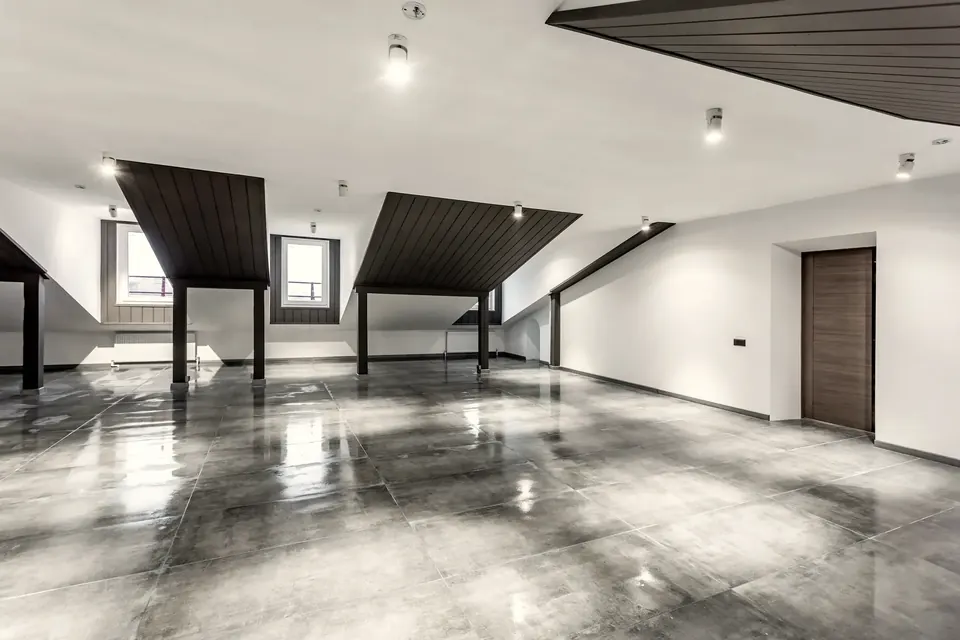
For lobbies, tasting rooms, salons and showrooms where the floor is part of the brand. See metallic epoxy flooring for details.
Fast-cure polyaspartic
When a space has to reopen the next morning, polyaspartic coatings make an overnight turnaround possible.
Businesses we work with
Retail and showrooms. Boutiques, auto and powersports showrooms, flooring and furniture galleries. The priority is appearance and scratch resistance.
Offices and professional suites. Polished-looking floors for reception areas, open offices and corridors that do not need the upkeep of carpet.
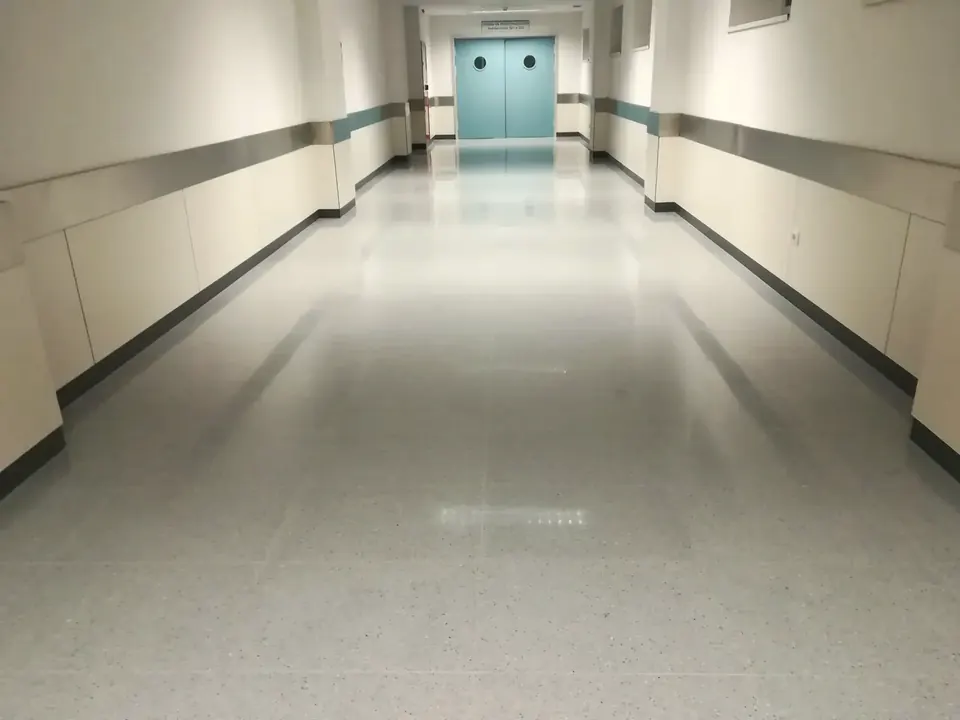
Healthcare and veterinary. Seamless floors with cove base for exam rooms, treatment areas and kennels, where cleaning is constant.
Food and beverage. Commercial kitchens, breweries, coffee roasters and bars need texture, chemical resistance and tolerance for hot water. We match the system to the exposure.
Fitness and recreation. Gyms, studios and locker rooms get durable, grippy surfaces that hold up to sweat and disinfectant.
Property management. Common areas, mechanical rooms, parking structures and trash rooms in multi-tenant buildings.
How a commercial project runs
- 01
Walkthrough and plan
We tour the space with you, test the slab and learn your constraints: hours, deliveries, tenants, inspections. The proposal includes a phasing plan, not just a price.
- 02
Removal of existing flooring
Tile, carpet, adhesive and failed coatings are removed. We contain dust with vacuums and barriers so neighboring areas stay usable.
- 03
Surface preparation
Grinding or shot blasting creates the profile the system needs. Thicker systems get a more aggressive profile.
- 04
Joint, crack and slope work
Joints are filled or honored, cracks are repaired, and areas around drains are checked so water runs the right way.
- 05
System installation
Primer, body coats, broadcast media and topcoats go down in sequence, with cove base formed where specified.
- 06
Turnover
We remove barriers, clean up and hand over maintenance instructions written for your cleaning crew.
Why the installer matters as much as the product
Commercial floors fail for predictable reasons: the slab was not tested, the wrong system was specified for the chemicals in use, or the schedule forced someone to coat over a primer that had not cured. An experienced installer sees those risks at the walkthrough and plans around them.
Coordination is the other piece. We work with general contractors, property managers and health inspectors regularly, and we understand that our work has to fit between the plumber and the equipment install. If a deadline is tight, we would rather know at the start and choose a faster chemistry than cut a corner at the end.
Documentation also counts. You receive the product data sheets for what was installed, the cure schedule and cleaning guidance. If you ever sell the business or need to match the floor in an expansion, that record is useful.
Commercial floors and Wisconsin conditions
Entrances take a beating here. For four or five months a year, every customer brings in snow, sand and salt. We give vestibules and the first several feet inside the door more texture and a tougher topcoat, and we recommend walk-off matting to go with it. The combination keeps the rest of the floor looking good.
Winter also affects installation. Buildings under construction or renovation are often unheated, and standard epoxy will not cure properly on a cold slab. We check slab temperature, not just air temperature, and move to cold-tolerant resins when we have to.
Older commercial buildings in and around downtown Waukesha frequently have slabs with no vapor barrier and several generations of flooring adhesive. Those take more preparation and sometimes a moisture-mitigation primer. It is better to budget for that up front than to find out a year after opening.
Budgeting for a commercial floor
Owners often compare the installed price of a resin floor with vinyl tile or sealed concrete and stop there. The fuller comparison includes what the floor costs to own. Vinyl tile needs stripping and waxing on a regular cycle. Carpet tile needs deep cleaning and periodic replacement in the traffic lanes. Bare sealed concrete has to be resealed and never stops showing stains.
A resin floor has a higher first cost than most of those and a very low upkeep cost. Daily cleaning is faster, there is no wax program, and when the surface finally shows wear, a new topcoat renews it at a fraction of the original price.
Three things move the installed number: how much old flooring and adhesive has to come up, whether the slab needs moisture mitigation, and how tightly the work has to be phased. Night and weekend work in several small phases costs more than one open stretch. If you can give us a clear area and a few consecutive days, the price reflects it.
Keeping the floor looking new
We leave every commercial client with a short maintenance sheet written for whoever cleans the building. The essentials are simple. Keep walk-off mats at every exterior door, especially from November through March. Dust mop daily so grit does not act like sandpaper underfoot. Scrub with a neutral-pH cleaner and a soft pad, and rinse so no detergent film is left behind. Put protective glides on chairs and display fixtures.
Avoid harsh degreasers at full strength, abrasive black pads and any product that promises to add shine. The gloss or satin sheen is in the topcoat itself and does not need help.
Commercial flooring questions
Can you work while we stay open?
In most cases, yes. We divide the floor into sections, complete one while the rest stays in use, and schedule noisy grinding for off-hours. Small spaces are often done over a weekend.
How long will the smell last?
The high-solids products we use indoors have low odor, and we ventilate during and after application. Most spaces are comfortable to occupy the next business day. For sensitive settings such as clinics and food service, we choose materials accordingly.
Is epoxy flooring acceptable in a commercial kitchen?
Seamless resin floors with cove base are widely used in food service because they are non-porous and easy to sanitize. Final approval rests with your local health authority, so we recommend sharing the specification with your inspector before installation.
How slip resistant will it be?
As much as the space requires. We add graded aggregate to the topcoat or use a quartz broadcast in wet areas. There is a trade-off: more texture is safer when wet and takes a bit more effort to mop. We will show you samples to stand on.
What maintenance does it need?
Daily dust mopping and regular scrubbing with a neutral cleaner. No wax. In high-traffic lanes, a fresh topcoat every several years restores the finish without replacing the floor.
Can you match our brand colors or add a logo?
Yes. Solid colors can be tinted to a close match, and logos or borders can be inlaid under the clear coat. Bring your brand guide to the walkthrough.