What a garage coating actually does
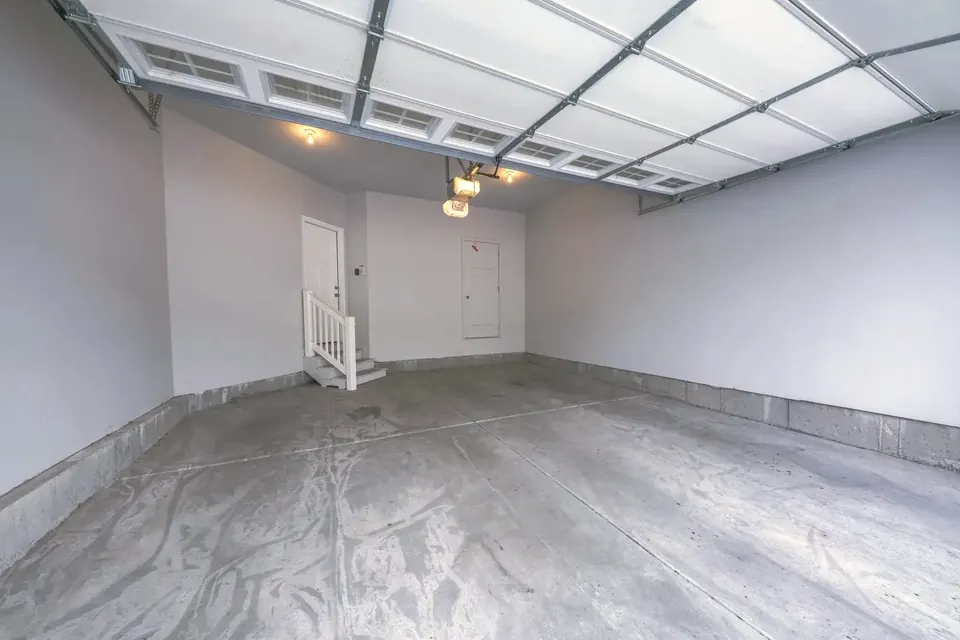
Bare concrete looks solid, but it behaves like a very hard sponge. Water, oil and dissolved salt all soak into the top layer. In a Waukesha garage that means months of brine sitting in the pores of the slab, freezing overnight and thawing when the car comes home warm. Over a few winters the surface starts to pit and scale, usually in the tire lanes and just inside the overhead door.
A garage floor coating closes those pores. Meltwater and whatever is dissolved in it stay on the surface, where you can push them out with a squeegee. Oil drips wipe up instead of leaving a permanent shadow. Dust stops coming off the floor and settling on everything you store out there.
It also changes how the space feels. A coated garage is brighter, cleaner and far more pleasant to walk through, which matters when the garage is the door your family actually uses.
Benefits you will notice in the first winter
- Salt stays on top. Chlorides cannot reach the concrete, so pitting and scaling stop getting worse.
- Cleanup is quick. Slush melts into puddles that squeegee straight out the door. In spring, a hose and a mild degreaser bring the floor back.
- No more hot-tire marks. Professional topcoats do not soften under warm tires the way one-part paints do.
- Better footing. A flake broadcast or a traction additive gives wet boots something to hold.
- Less dust in the house. Sealed concrete does not shed fine powder that gets tracked through the mudroom.
- A finished look. Color runs wall to wall and a few inches up the stem wall if you want it, which makes the garage look like part of the home.
Garage floor systems and finishes
We do not have one house system. The slab, the season and how you use the garage decide what we recommend.
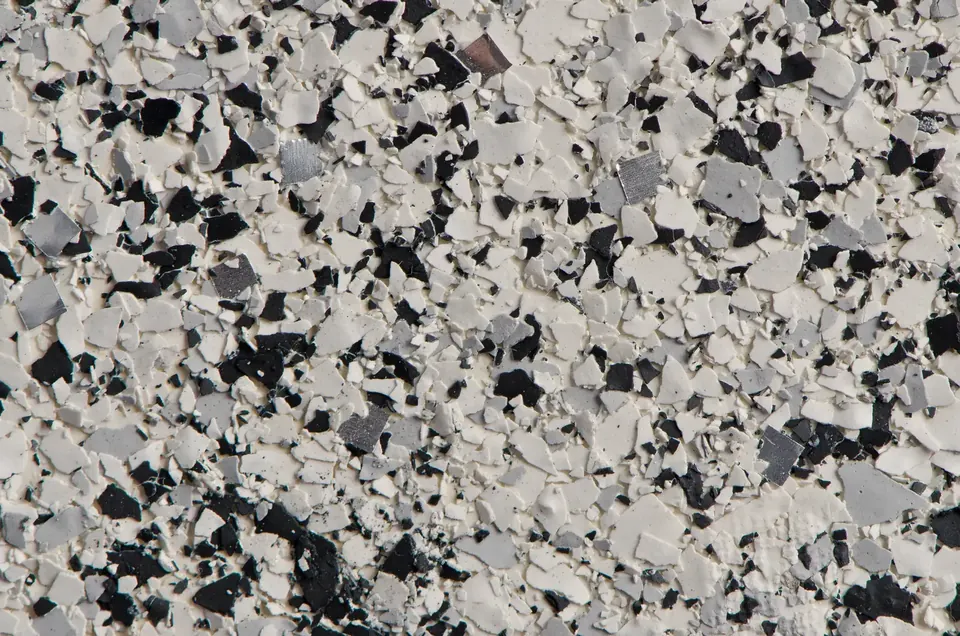
Full-broadcast flake
The floor most people picture. Vinyl flakes are thrown into a wet base coat until the surface is completely covered, then sealed under a clear topcoat. It hides dirt, adds texture and comes in dozens of blends. See our decorative flake flooring page for color guidance.
Solid-color epoxy
A clean, uniform color with a gloss or satin finish. It suits workshops and detail bays where you want to see every dropped fastener. It does show dust and tire tracks more readily than flake.
One-day polyaspartic or polyurea
Fast-curing resins that allow the whole floor to be finished in a single visit and driven on a day or two later. They are also the answer when the slab is too cold for epoxy. Read more on our polyaspartic and polyurea pages.
Metallic showroom finish
For car collectors and anyone who wants the garage to be a destination. Pearlescent pigments create depth and movement under a glass-like topcoat. It is the highest-maintenance choice, and the most striking.
Where garage coatings make sense
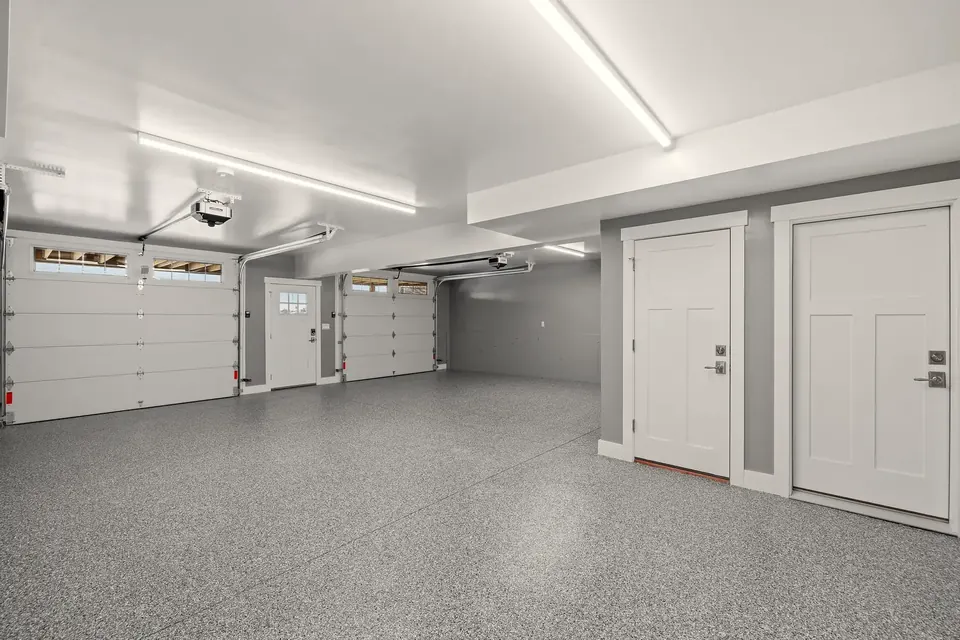
Attached two- and three-car garages are the bulk of our residential work, but the same systems go into detached garages, pole buildings with poured floors, storage condos, boat and sled storage, and the small shop space at the back of a deep bay.
A few situations deserve a conversation first. Slabs with a floor drain need the coating terminated cleanly at the grate. Garages with a step-down or a raised storage platform need the vertical faces coated to match. And garages that double as workshops may want more build and a tougher topcoat in the work zone than in the parking area. None of these are problems. They just need to be planned.
How we install a garage floor
- 01
Clear out and mask
You empty the floor. We mask the bottom of the drywall, the door tracks, and any cabinets or appliances that stay.
- 02
Grind the slab
Planetary grinders with diamond tooling remove the weak top layer, old sealers and tire residue. The edges are ground by hand. Vacuums run the whole time, so there is very little airborne dust.
- 03
Repair winter damage
Pits and spalls near the door are filled with a fast-setting polymer mortar and ground flush. Cracks are opened slightly, cleaned and filled. Control joints are either filled for a monolithic look or left as clean lines, depending on your preference and how much the slab moves.
- 04
Prime and build
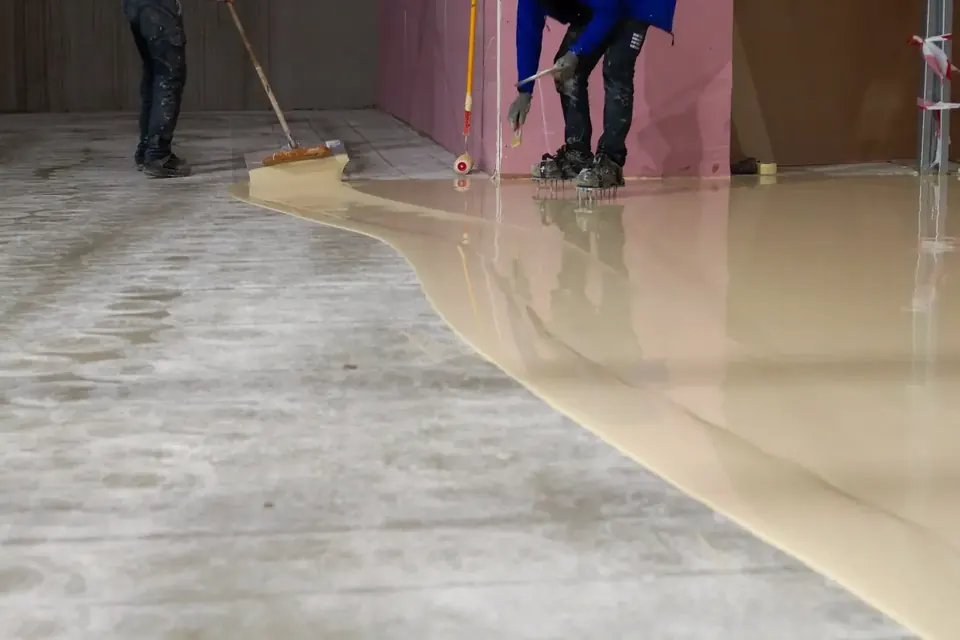
A primer or tinted base coat is rolled into the profiled concrete. On a flake floor, chips are broadcast into this coat until the surface will not take any more.
- 05
Scrape and topcoat
Once the base has set, loose flake is scraped and vacuumed off. One or two clear coats lock everything in and give the floor its chemical and abrasion resistance.
- 06
Cure
We tape off the door and leave written timing for walking, moving storage back and parking.
Why professional installation matters
The products sold in kits are not the same as the ones we use, but the bigger difference is preparation. A kit asks you to etch the floor with a mild acid and rinse it. That does nothing about densified or sealed concrete, leaves residue behind and adds water to a slab right before coating it. Most of the peeling garage floors we are asked to fix were done this way.
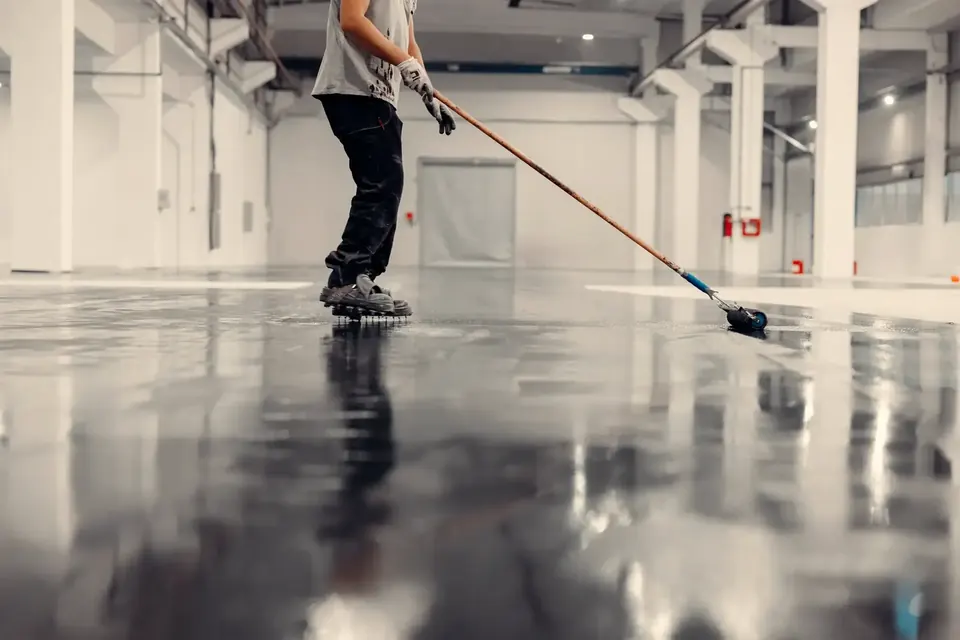
Professional equipment also matters. A walk-behind grinder weighs several hundred pounds and cuts a consistent profile across the whole slab in a few hours. The vacuums attached to it are built to capture silica dust. And the materials are high-solids, two-component resins that go down several times thicker than a retail paint.
There is experience, too. Knowing how fast a polyaspartic sets on a humid afternoon, how heavily to broadcast flake at the edges, or when a crack needs a flexible filler is what separates a floor that lasts from one that looks fine for a season.
Garage floors and Waukesha weather
Timing a garage project around here takes a little thought. Standard epoxy cures slowly, or not at all, below about 55 degrees at the slab, which makes late spring through early fall the easy season. If you want the floor done before winter and it is already November, a polyaspartic or polyurea system is the better choice because it cures in the cold.
We also pay attention to moisture. Spring snowmelt and a high water table can leave slabs damp from below, particularly in older garages poured without a vapor barrier. We test before we commit to a system. If the reading is high, a moisture-tolerant primer goes down first.
Finally, there is the apron. The strip of concrete right at the overhead door takes the worst of the freeze-thaw cycle, and it is where coatings fail first when they are installed carelessly. We carry the coating to the door line, seal the edge thoroughly and repair any scaling so water cannot work its way under.
Looking after the floor through the year
A coated garage floor needs very little, but a simple routine keeps it looking new. In winter, do not let brine dry on the surface for weeks. Push the meltwater out every few days and mop once or twice a month. A foam squeegee on a broom handle is the most useful tool you can own for this.
In spring, give the floor a proper wash. Sweep out the sand, scrub with warm water and a neutral cleaner, and rinse. That removes the salt film and brings the gloss back. Through summer and fall, an occasional sweep is all it takes.
A few things to avoid: citrus and vinegar cleaners, which dull the topcoat over time; dragging jack stands or steel ramps; and leaving a leaking battery sitting on the floor. Put a small mat under a kickstand or a floor jack that stays in one place.
Garage floor coating questions
Can you coat a garage floor that has already been painted or sealed?
Yes. Old paint, failed kits and sealers are ground off as part of preparation. It takes more time than a bare slab, and we account for that in the quote, but the end result is the same clean profile.
How do I clean a coated garage floor in winter?
Let the slush melt, then squeegee or push-broom the water out. Every few weeks, mop with warm water and a small amount of neutral cleaner to lift the salt film. Avoid soap-heavy products, which leave a residue that makes the floor slick.
Will studded tires or a snowblower damage the coating?
Normal parking with winter tires is fine. Studs can leave fine scratches if the tires spin, and dragging a snowblower's steel skids across the floor will mark any coating. Lift, do not drag, and the floor will hold up well.
My slab has cracks. Will they come back through the coating?
Hairline shrinkage cracks that are no longer moving are filled and generally stay hidden, especially under flake. Cracks that open and close with the seasons can reappear as a fine line. We will point out which ones we expect to behave and which we do not.
Do you coat the vertical curb or stem wall?
We can. Carrying the coating up the first few inches of foundation wall gives the garage a finished look and makes it easier to hose out. It is priced by the linear foot and is entirely optional.
How long before I can move my shelving and tool chests back?
For most systems, light items can go back after about 24 hours. Heavy cabinets and anything on steel wheels should wait until the floor is ready for vehicles. Your written cure schedule spells this out.