What a flake floor is made of
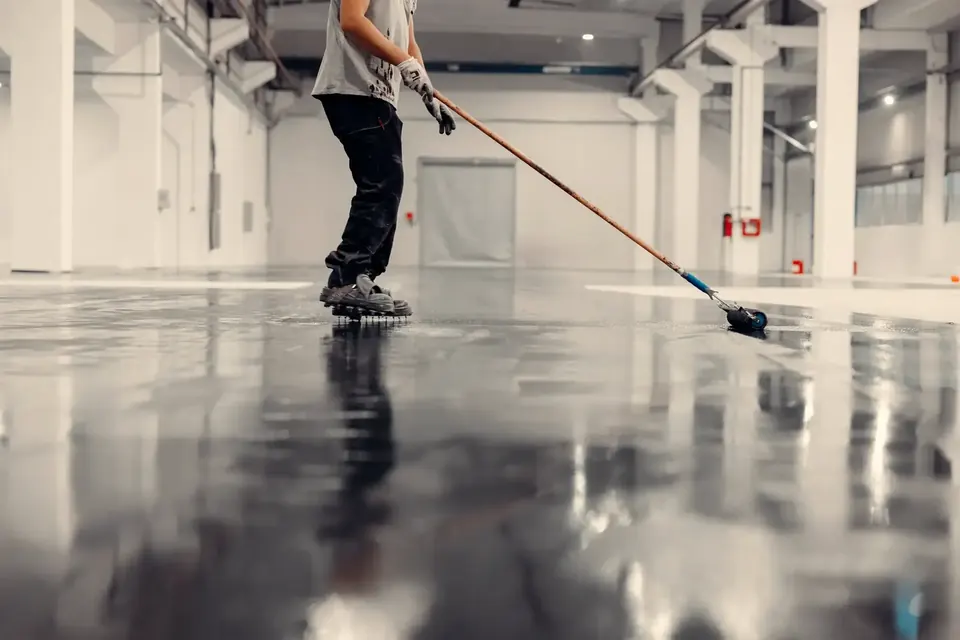
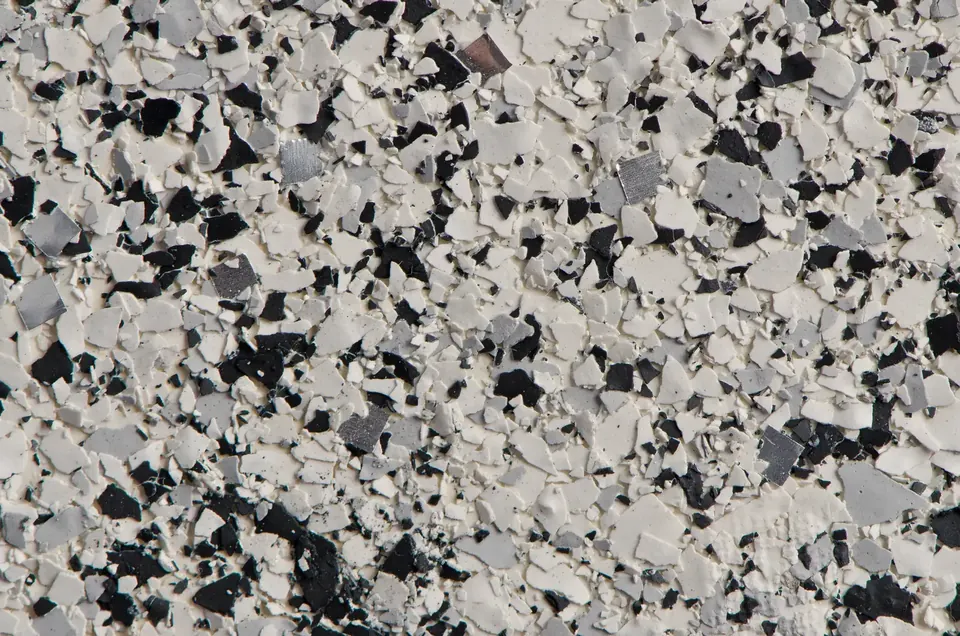
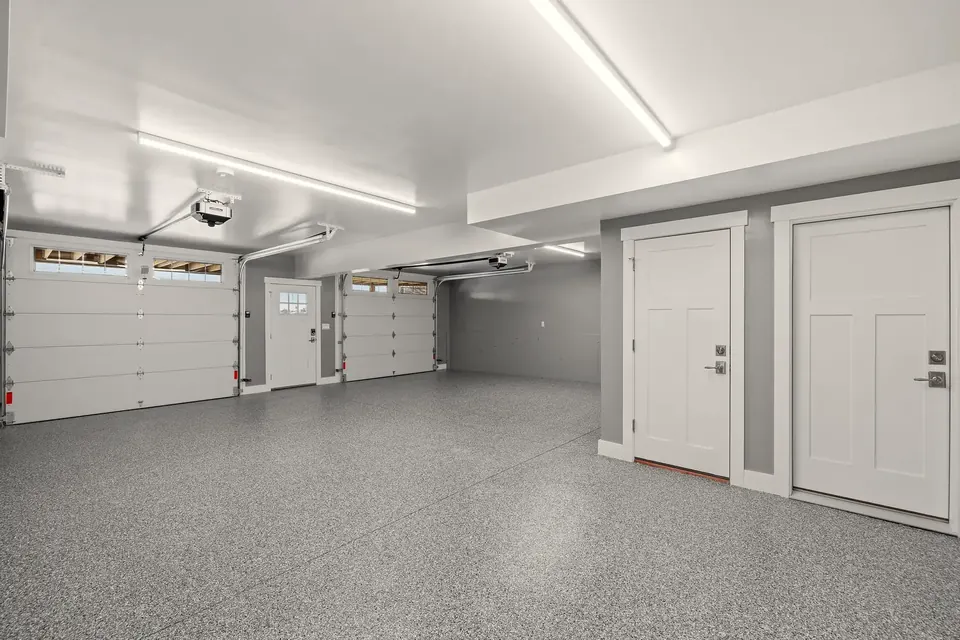
A flake floor, sometimes called a chip floor, is a layered system. First comes a pigmented base coat rolled onto prepared concrete. While that coat is still wet, colored vinyl flakes are thrown across it by hand until the surface is buried. After the base cures, the loose excess is scraped and vacuumed away. What remains is a dense, slightly textured layer of chips bonded into the resin. A clear topcoat, or two, goes over that to seal and protect it.
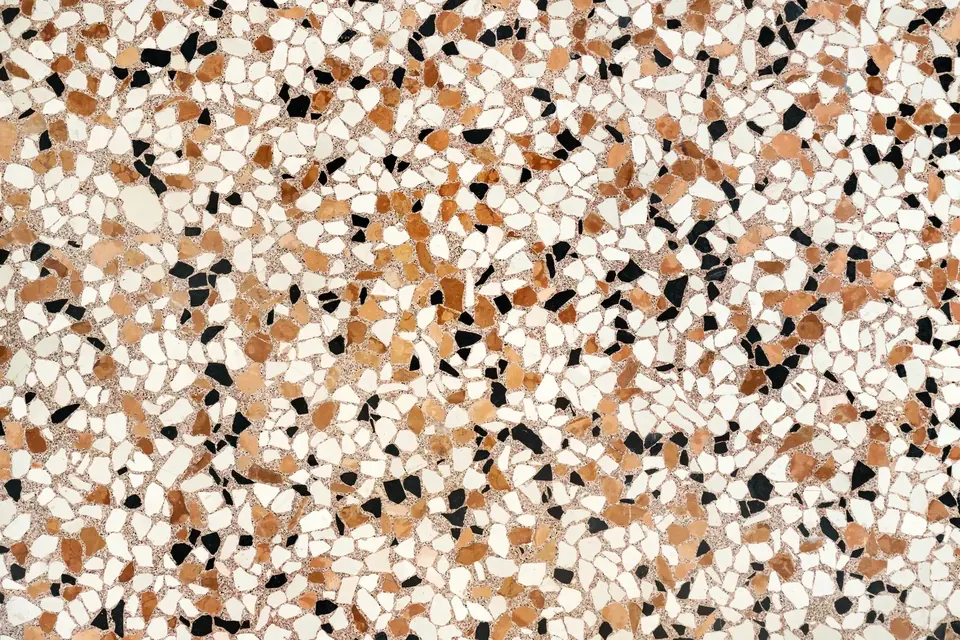
The flakes themselves are thin, paint-like chips made in dozens of colors and several sizes. Blends combine three to five colors so the finished floor reads as granite or terrazzo from standing height.
That random, multi-tone pattern is the reason flake floors are so popular in Waukesha garages. Dust, sand, dried salt and small leaves simply disappear into it. A solid grey floor looks dirty by Tuesday. A flake floor looks about the same on day ten as it did on day one.
Advantages of a flake system
- Camouflage. The pattern hides dirt, tire marks and the small chips and scratches that any floor picks up.
- Built-in traction. The edges of the flakes create a fine texture under the topcoat. It is noticeably safer than smooth resin when wet.
- Forgiving of old concrete. Patches, repaired cracks and color differences in the slab vanish under full coverage.
- Thickness. The flake layer adds real build to the floor, which improves impact resistance.
- Fast installation. With polyaspartic or polyurea resins, a garage can be finished in a day.
- Easy upkeep. Sweep, then mop or hose. There is no wax and nothing to reseal each year.
Choosing a blend, size and coverage
Blend
Greys with black and white are the neutral standard. Tans and browns warm up a space and pair well with beige or brick exteriors. Blends with blue or green chips add personality without getting loud. We will bring sample boards so you can compare them in your own light.
Flake size
Quarter-inch flake is the garage standard and gives a classic granite look. Eighth-inch and smaller micro-flake produce a finer, more uniform pattern suited to interiors and commercial space. Larger flake is bolder and more casual.
Coverage
Full broadcast means flake to rejection, with no base color showing. It gives the most texture, thickness and hiding power, and it is what we recommend for nearly every floor. Partial broadcast, where chips are sprinkled lightly over a visible base color, costs a bit less and wears less evenly.
Topcoat sheen and texture
A gloss topcoat makes the colors pop. A second topcoat smooths the texture for easier mopping, while a single coat leaves more grip. For entries and pool-adjacent areas, extra traction additive is an option.
Good places for a flake floor
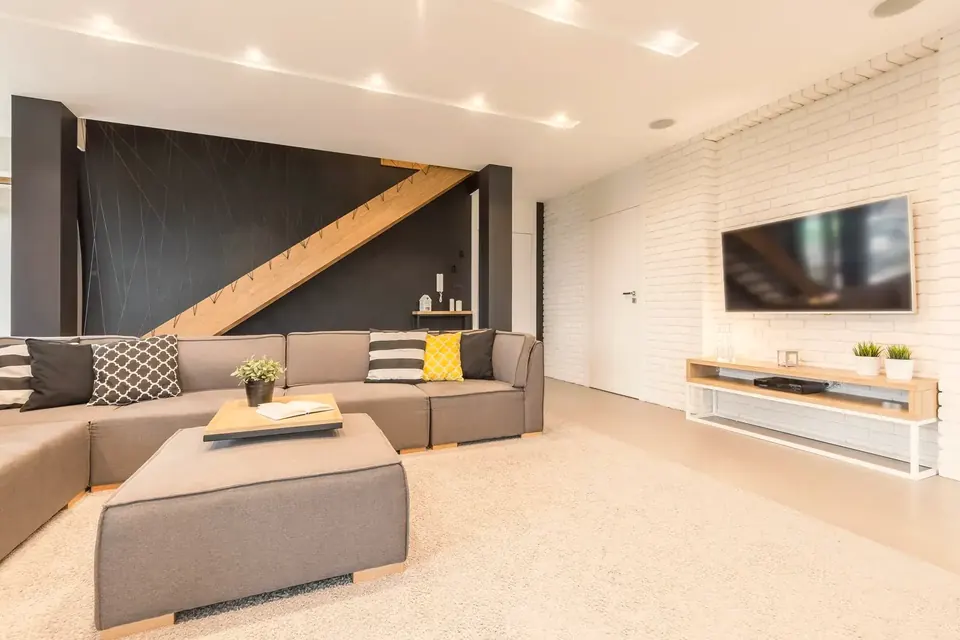
Garages lead the list, and our garage floor coatings page covers that in depth. Beyond garages, flake goes into basements, laundry rooms, mudrooms, covered porches, three-season rooms, dog-wash stations and workshop floors.
On the commercial side, flake is a sensible choice for retail floors, veterinary clinics, locker rooms, restrooms, break rooms, school corridors and service counters. Anywhere that sees wet shoes and needs to look tidy between cleanings is a candidate.
With a UV-stable polyaspartic topcoat, flake systems can also be used on patios, stoops and pool decks. See patio and concrete coatings for what is different outdoors.
How we install a flake floor
- 01
Prepare the concrete
The slab is diamond ground and vacuumed. Pits, spalls and cracks are repaired so the surface is sound and reasonably flat.
- 02
Apply the base coat
A tinted base, matched to the dominant flake color, is cut in at the edges and rolled across the floor in sections.
- 03
Broadcast the flake
Chips are thrown up and outward so they fall evenly, like snow, into the wet resin. We keep going until no wet spots show.
- 04
Reclaim and scrape
Once the base has set, loose chips are swept up. The surface is scraped in two directions to knock down any flakes standing on edge, then vacuumed thoroughly.
- 05
Seal with clear coat
A clear polyaspartic or urethane topcoat is squeegeed and back-rolled so it flows around every chip. A second coat is added for a smoother finish if specified.
- 06
Final check
We inspect edges, steps and thresholds, remove masking and review cure times with you.
Why the details decide how a flake floor turns out
A flake floor looks simple, and that hides how much technique is involved. Uneven broadcasting leaves light and heavy patches that are obvious once the topcoat goes on. Too little scraping leaves a surface rough enough to shred a mop. Too much topcoat fills the texture and makes the floor slick. Too little leaves chips exposed at their edges, where they can lift.
Base coat choice matters as well. On a damp slab or a cold one, the wrong resin will not bond no matter how good the flake looks on top. And at the garage door, the system has to be terminated cleanly and sealed so that water cannot wick under the edge.
These are small things individually. Together they are the difference between a floor that gets better-looking with a hose-down and one that starts shedding chips by its second winter.
Flake floors and Wisconsin use
We often suggest going a shade lighter than your first instinct. Dried road salt leaves a white film, and it is much less visible on a light or medium grey blend than on a dark one. Blends with some white and tan in them are the most forgiving through winter.
Texture is worth thinking about, too. A single topcoat over full flake gives excellent grip for snowy boots. If you plan to mop the floor often, as in a basement or mudroom, a second topcoat makes that easier while keeping enough tooth to be safe.
Lastly, flake floors pair naturally with fast-cure resins. That means a garage can be coated in October or even November, on a slab too cold for standard epoxy, and be back in service before the first real snow.
What a flake floor costs, and what changes the price
Flake is one of the better values in resin flooring because it installs quickly and forgives imperfect concrete. The price for a given floor comes down to a handful of things.
Size is first. Larger floors cost less per square foot, since setup, edging and masking are spread over more area. Slab condition is next. A newer garage with a clean broom finish needs only grinding. An older one with pitting at the door, wide cracks or a failed coating needs repair or removal first, and that is labor.
The resin matters as well. A polyurea and polyaspartic system costs more in material than an epoxy base with the same topcoat, but it can be finished in a day and installed in cold weather. Coverage and extras round it out: full broadcast uses more flake than partial, a second topcoat adds a step, and coating the stem walls or steps adds square footage.
We price each of those as a separate line. That way you can see, for example, what it would save to skip the stem wall or what it would add to upgrade the topcoat, and decide for yourself.
Decorative flake questions
Do the flakes ever come loose?
Not when the floor is properly topcoated. The chips are embedded in the base coat and locked under clear resin. Loose flakes are a sign of too little topcoat or a failure in the bond to the concrete.
Is the floor rough to walk on barefoot?
A single-topcoat garage floor has a light orange-peel feel, comfortable in shoes and fine in socks. Interior floors usually get a second topcoat and are smooth enough for bare feet.
Can I get a custom color blend?
Yes. Manufacturers stock a wide range of standard blends, and custom mixes can be ordered to match a particular color scheme, a team, or a brand.
How does flake compare with a solid-color floor?
Flake hides more, grips better and is thicker. Solid color has a cleaner, more industrial appearance and shows everything. For most garages and family spaces, flake is the easier floor to own.
Can a flake floor be repaired if it gets damaged?
Yes, and it is one of the easiest finishes to patch. Because the pattern is random, a repaired area blends in well once it is topcoated.
Will hot tires lift it?
Hot-tire pickup is a failure of weak, thin coatings on poorly prepared concrete. A professionally ground floor with a polyaspartic or urethane topcoat is not affected by normal driving and parking.