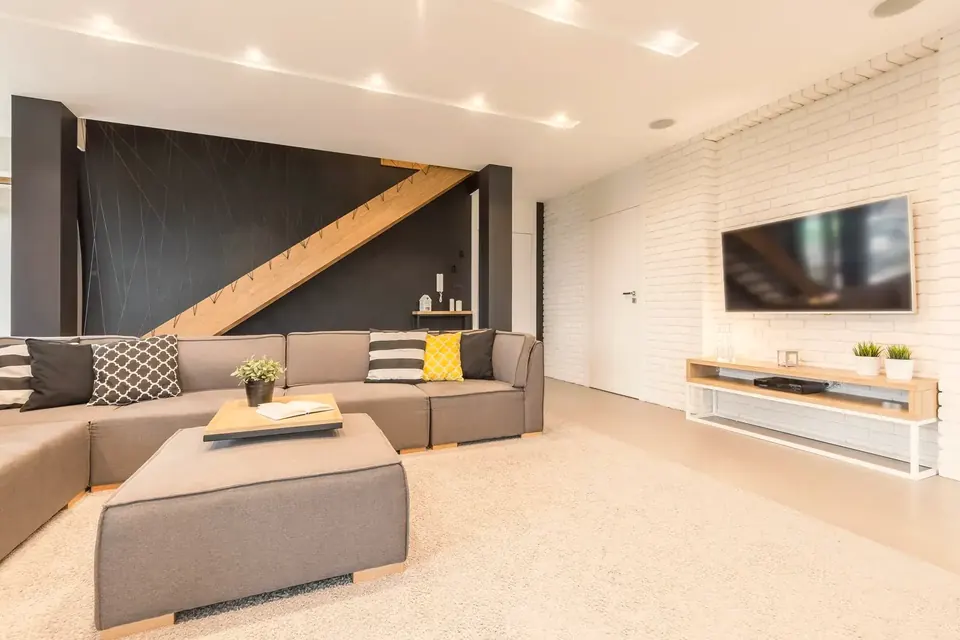
A practical floor for the practical parts of a house
Every home has rooms that are asked to do too much. The basement is a playroom, a gym, a storage area and the place the dog dries off. The laundry room handles wet clothes, detergent and a utility sink. The mudroom takes every boot in the family from November through March. Most of these rooms are built on a concrete slab, and most traditional floor coverings are not well suited to living on one.
Epoxy and related resin floors are. They bond directly to the concrete, cure into a continuous surface with no seams, and do not swell, curl or grow mold when they get wet. If a water heater lets go or the sump pump loses power in a storm, you squeegee and mop instead of tearing out flooring.
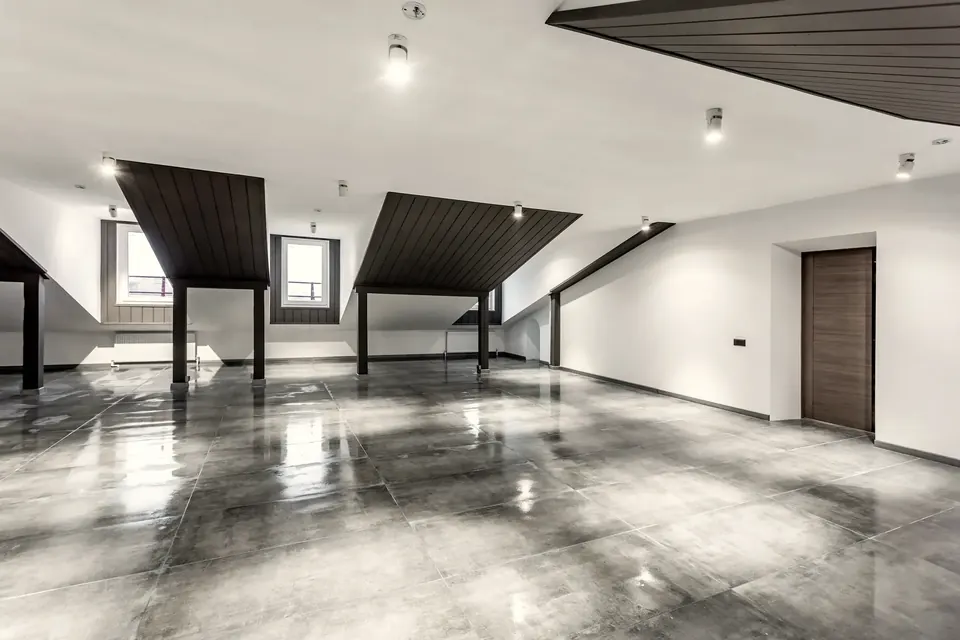
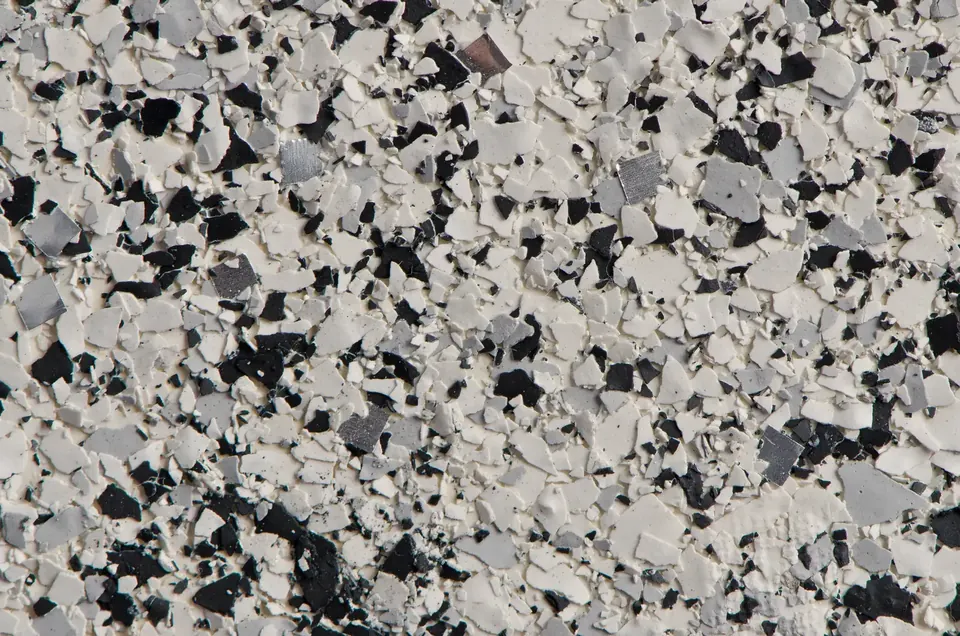
The finish can be as quiet or as bold as you like. A fine neutral flake reads as terrazzo. A satin solid color looks modern and clean. A metallic floor turns a lower-level bar into the best room in the house.
Why homeowners choose resin over other basement floors
- It tolerates water. There is nothing organic in the floor to rot or mildew, and there are no seams for water to get under.
- It is easy to live with. A dust mop and an occasional damp mop are the whole maintenance plan. Pet accidents and spilled juice do not soak in.
- It keeps ceiling height. A coating adds a small fraction of an inch. That matters in older basements where every bit of headroom counts.
- It works with in-floor heat. Resin floors conduct warmth well and are compatible with hydronic radiant slabs.
- It handles weight. Treadmills, squat racks, freezers and pool tables sit directly on it without denting.
- It looks intentional. A coated floor reads as a design decision, not as bare concrete someone gave up on.
Finish options for inside the home
Fine-flake and micro-flake blends
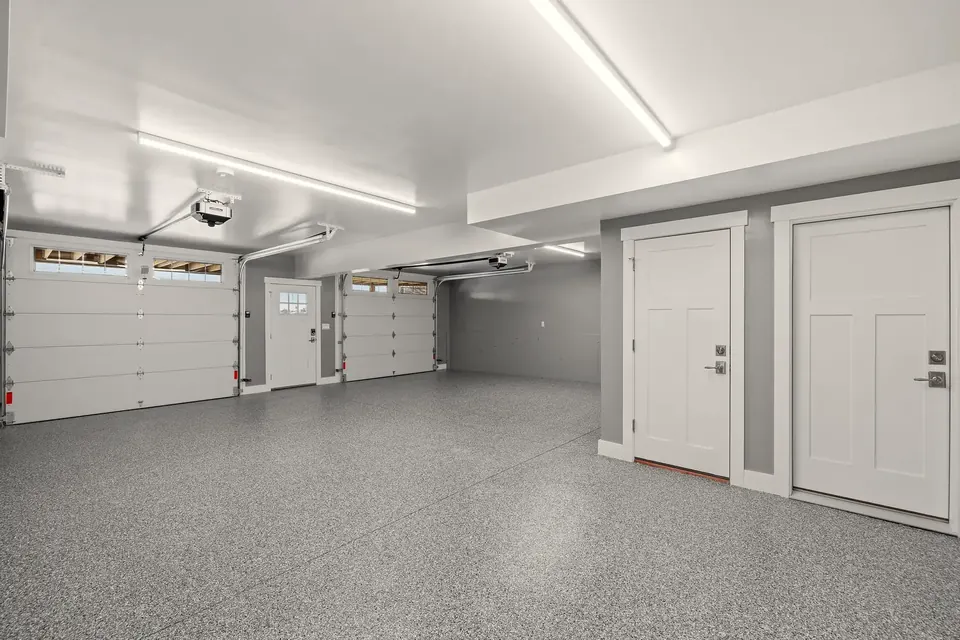
Smaller chips give a tighter, more refined pattern than the large flake used in garages. In soft greys, taupes and creams it resembles a stone composite, and it hides lint, pet hair and everyday dust well.
Solid color, satin sheen
A single color with a low-glare topcoat suits home gyms, craft rooms and modern lower levels. We usually recommend mid-tones, because very dark and very light solids both show more dust.
Metallic epoxy
Reflective pigments are moved through clear resin by hand to create marbled, cloud-like patterns. No two floors match. Our metallic epoxy flooring page explains how the effect is made and how to care for it.
Quartz broadcast
Colored quartz sand is embedded in the resin for a dense, textured, very durable floor. It is a good fit for home workshops, wet bars and basement bathrooms where extra grip is welcome.
Rooms where we install residential floors
Basements and lower levels. Finished or unfinished, a coated slab makes the space cleaner and more usable. In a finished basement, it becomes the finished floor. In an unfinished one, it controls dust and makes storage areas easier to sweep.
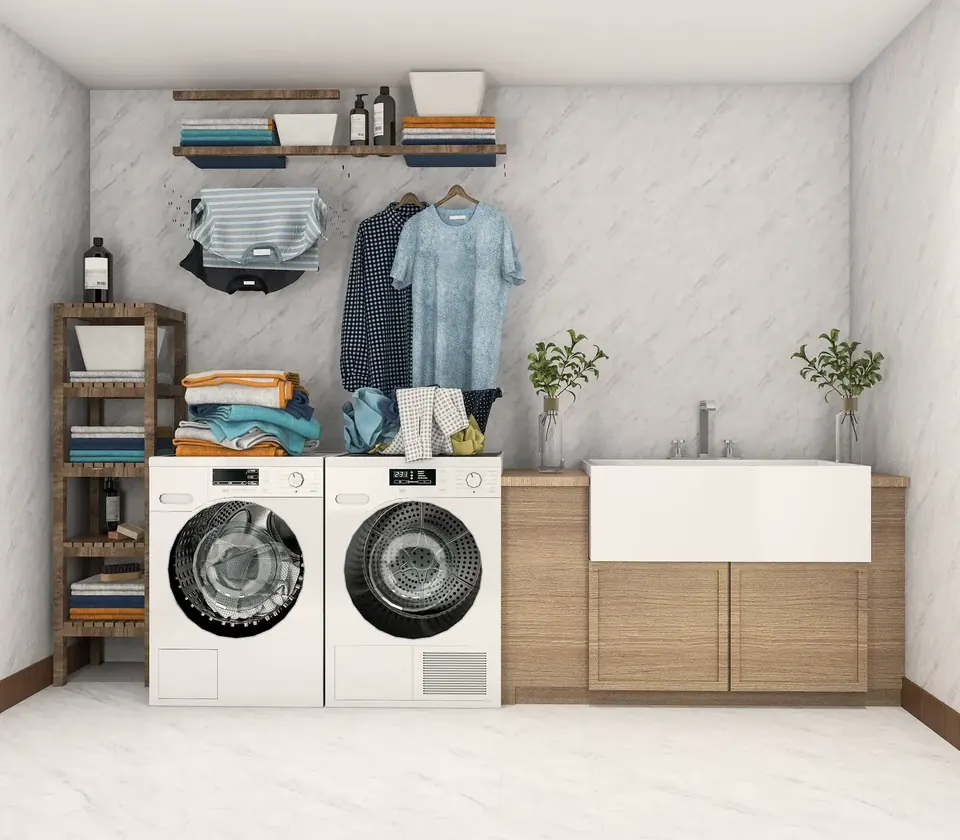
Laundry and utility rooms. These are small spaces, so they are quick to do and the improvement is obvious. Coating under and around appliances means leaks have nowhere to hide.
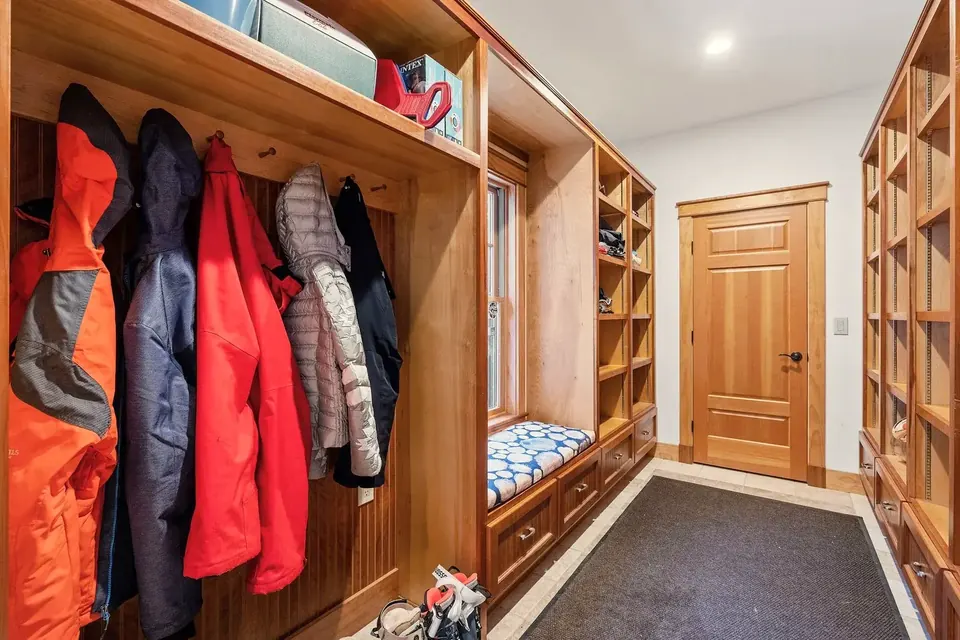
Mudrooms and back entries. Where slab-on-grade entries exist, a textured coating handles snow, salt and grit far better than hardwood or laminate.
Home gyms. Rubber mats can go right on top where weights get dropped, and the rest of the floor stays easy to wipe down.
Home workshops. A thicker build and a chemical-resistant topcoat stand up to finishes, glue and rolling tool bases.
How an interior project goes
- 01
Moisture and slab check
We test for moisture vapor, look for efflorescence and old adhesive, and note floor drains, sump crocks and cracks.
- 02
Room protection
Doorways are sealed with plastic, returns are covered, and stairs and adjoining floors are protected. Furniture is moved out or shifted in phases.
- 03
Adhesive removal and grinding
Old carpet glue, tile mastic and paint come off with the grinder. The slab is profiled and vacuumed until it is clean to the touch.
- 04
Repairs and leveling
Cracks are filled, low spots at old drains are feathered, and transitions at doorways are detailed so the coating ends in a neat line.
- 05
Primer, color and topcoat
A moisture-tolerant primer goes down first when readings call for it. Then the color coat and any flake, quartz or metallic work, followed by a clear protective finish with the sheen you chose.
- 06
Reassembly
After the cure period we remove protection and walk the floor with you. Furniture goes back on felt pads.
Why this is not a weekend project
Interior floors are less forgiving than garages. You see them up close, in good light, every day. Roller marks, missed edges and lint in the finish are all visible. Getting a uniform result takes proper spiked rollers, the right squeegees, and someone who has done it enough times to keep a wet edge across a whole room.
Then there is air quality. We select low-odor, high-solids products for occupied homes and ventilate while we work. Retail kits are often solvent-heavy, and the smell can travel through the ductwork for days.
Moisture is the biggest reason to bring in a professional. A basement slab that looks dry can still be releasing enough vapor to blister a coating within a year. Knowing how to test, how to read the numbers and which primer to answer them with is most of what you are paying for.
Basement floors in Waukesha County
Soils in this area are heavy with clay and hold water for a long time after snowmelt and spring rain. That is why drain tile and sump pumps are standard here, and it is why we never coat a basement on appearance alone. If we see white, powdery deposits on the slab, damp rings around the perimeter or a pump that runs constantly, we talk about that before we talk about color.
Homes from the 1950s through the 1970s often have slabs poured without a vapor barrier and finished with tile set in black adhesive. That adhesive has to be removed mechanically, and in some cases tested, before coating. Newer homes generally have a barrier under the slab and are simpler candidates.
Where moisture is moderate, a vapor-tolerant epoxy primer lets us coat with confidence. Where it is severe, the right answer may be to address drainage first. We would sooner lose a job than install a floor we expect to fail.
What shapes the cost of an interior floor
Square footage is only part of it. The biggest swing in price usually comes from what is on the slab now. Bare, clean concrete is the simplest starting point. Glued-down carpet, tile set in old mastic or several coats of basement paint all add removal time before grinding can even begin.
Moisture is the second factor. A slab that tests dry can take a standard primer. One that tests higher needs a moisture-mitigating primer, which costs more per square foot and adds a day.
The finish matters too. A single-color floor with a satin topcoat is the most economical. Flake and quartz add material and a scraping step. Metallic floors take the most labor because of the hand work involved. Finally, small rooms cost more per square foot than large ones, since setup, masking and edge work take about the same time either way. We lay all of this out in the written scope so you can see where the money goes.
Residential flooring questions
Is epoxy flooring cold underfoot?
It is about the same temperature as the slab beneath it, much like tile. Area rugs are easy to add in seating areas, and the floor works well with radiant heat if your home has it.
Will the smell bother us during installation?
We use low-odor products indoors and ventilate the work area. Most families notice a mild smell on application days that fades as the floor cures. If anyone in the home is sensitive, tell us, and we can plan the schedule around it.
Can you coat over old basement tile?
Usually we remove it. Coatings need to bond to concrete, and loose or hollow tile would carry the new floor with it when it fails. Older nine-inch tiles and black mastic may need testing before removal, and we will point that out at the estimate.
What happens if my basement gets water?
A coated floor will not be harmed by water sitting on top of it. Squeegee it toward the drain or pump, mop, and let it dry. Water coming up from below under pressure is a different matter, which is why testing comes first.
Are these floors safe for kids and pets?
Once cured, the floor is inert and easy to keep clean. We can add a light texture for grip. Dog claws do not hurt a quality topcoat, though very large dogs can leave fine surface scuffs on high-gloss finishes over time.
How do I take care of it?
Dust mop regularly and damp mop with a neutral cleaner when needed. Use felt pads under furniture, and skip wax or acrylic polish. The finish does not need them.