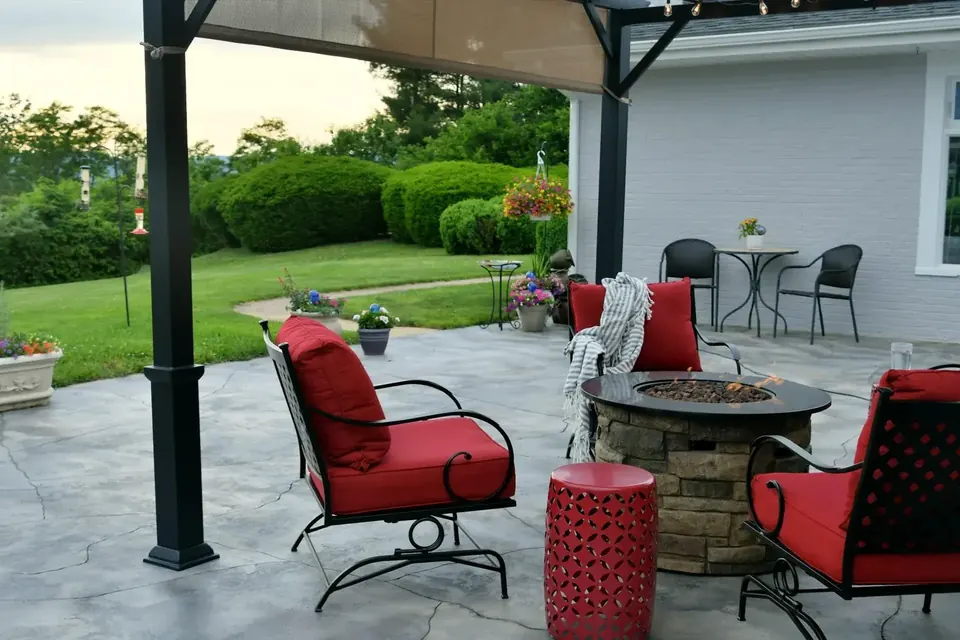
Why outdoor concrete wears out here
A patio slab has a harder job than it looks. Rain and snowmelt soak into the surface. When the temperature drops, that water freezes and expands inside the pores of the concrete, and tiny pieces of the surface pop loose. Repeat that dozens of times each winter and you get scaling, where the smooth top layer flakes off and leaves rough, sandy aggregate showing.
De-icing salt makes it worse. Salt lowers the freezing point, which increases the number of freeze-thaw cycles the slab goes through, and it draws more water into the concrete. Front stoops and walkways, where salt gets used the most, are usually the first to go.
Then summer arrives, with strong sun, hot grills, dripping planters and dragged furniture. After a number of years, the concrete looks tired even though it is structurally fine.
A coating will not make old concrete new. What it does is seal the surface against water and salt, cover stains and patched areas with a uniform finish, and add texture for safe footing. Done on the right slab, it adds years to the life of the concrete and makes the space somewhere you want to sit.
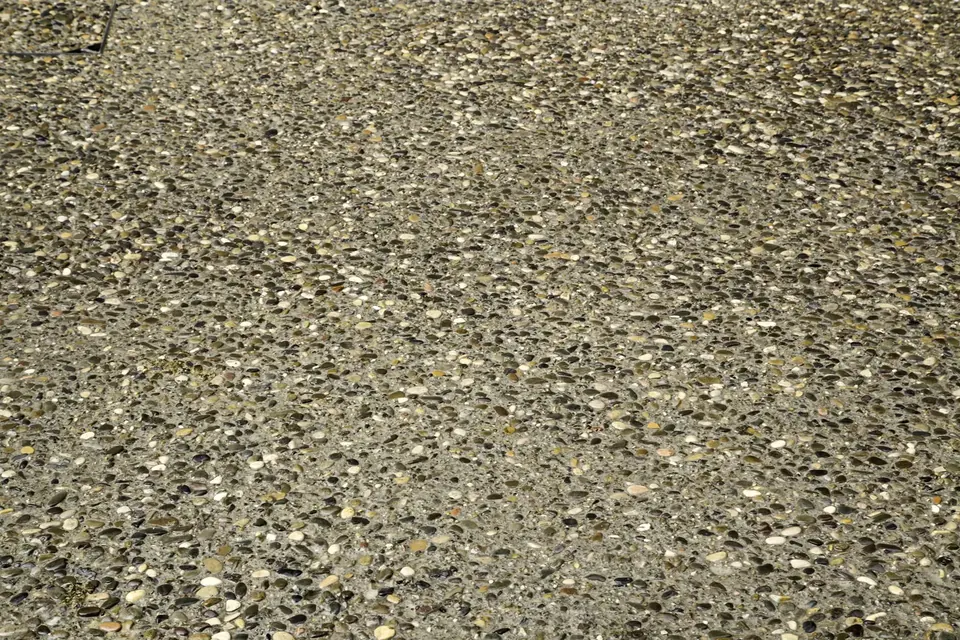
What a coated patio gives you
- Protection from water and salt. The surface is sealed, so less moisture gets in to freeze.
- A consistent appearance. Stains, repairs and mismatched pours disappear under one finish.
- Slip resistance. Texture is built in, which matters around pools and on steps.
- Color that holds. UV-stable resins do not chalk or yellow in direct sun.
- Simple cleaning. Leaves, pollen and bird droppings rinse off with a garden hose.
- A more finished outdoor room. A coated patio looks deliberate next to new landscaping or a remodeled exterior.
Exterior systems we install
Polyaspartic flake
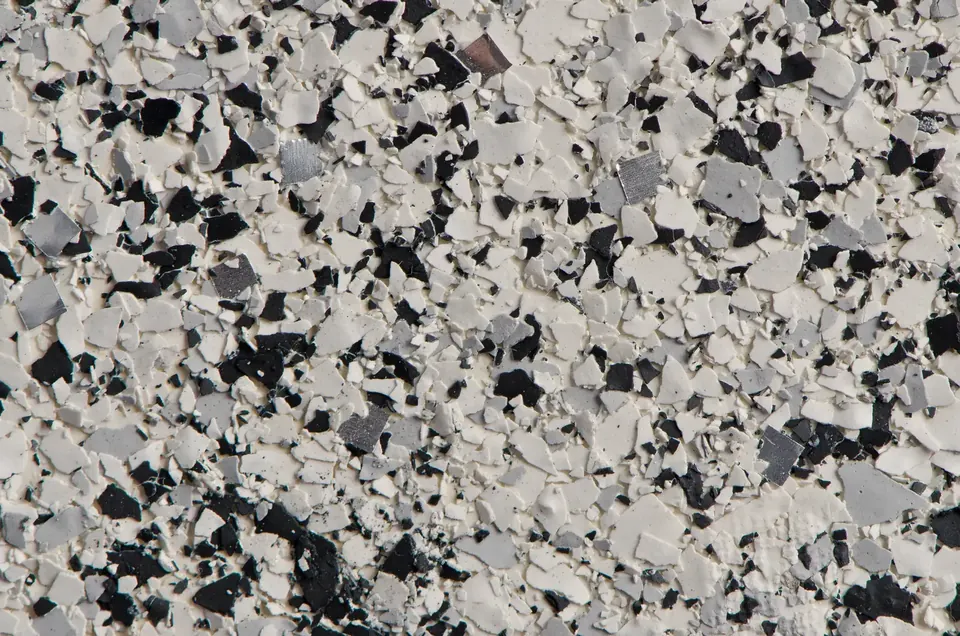
The same full-broadcast flake used in garages, finished with a UV-stable clear coat and extra traction. It is durable, good-looking and well suited to patios, porches and stoops.
Quartz broadcast
Colored quartz sand in clear resin gives a finer, sandier texture with excellent grip. We like it for pool surrounds, steps and ramps.
Solid-color coatings
A uniform color with a slip-resistant additive. It is a clean, modern finish for covered porches and walkways.
Concrete repair and resurfacing
Where the surface has scaled, we rebuild it with polymer-modified overlays before coating. Small spalls and edges are patched individually.
Clear penetrating sealers
For concrete that is still in good shape, sometimes the right answer is not a coating at all. A penetrating sealer reduces water and salt absorption without changing the look.
Surfaces we work on
Patios. Poured slabs in back yards, around fire pits and under pergolas.
Front stoops and steps. High-visibility, high-salt areas where traction and durability both matter.
Covered and screened porches. Protected from the worst weather and ideal for decorative finishes.
Walkways. Paths from driveway to door and around the side of the house.
Pool decks. Textured, cooler-feeling surfaces in lighter colors.
Commercial entries and outdoor seating. Storefront aprons, restaurant patios and building entrances.
Driveways are a special case. Coatings on driveways face plow blades, studded tires and full exposure, and we generally recommend sealing over coating. If you are considering it, we will talk through the trade-offs.
How an exterior project comes together
- 01
Assessment
We check that the slab is sound, look at how water drains, test for existing sealers and measure moisture. Concrete that is heaving or breaking apart needs replacement, not coating.
- 02
Cleaning and grinding
The surface is ground to remove the weak top layer, old sealer and stains. Edges along the house, posts and steps are detailed by hand.
- 03
Repairs
Scaled areas, cracks and chipped step edges are rebuilt with exterior-rated repair materials. Joints are cleaned and sealed with flexible filler.
- 04
Base and broadcast
The base coat is applied and flake or quartz is broadcast for texture and color. Vertical faces of steps are coated to match.
- 05
UV-stable topcoat
One or two clear coats seal the system. Traction additive is standard outdoors.
- 06
Cure
Foot traffic is usually fine the next day. Furniture, grills and planters go back after two to three days.
Why exterior work rewards experience
Outside, the weather is part of the crew. The slab has to be dry, which means watching the forecast for a day or two before and after. Coatings applied in direct afternoon sun can flash off too fast and bubble as the concrete releases air, so we often work early or follow the shade. Dew point matters as well. If the surface temperature drops close to it in the evening, moisture can condense on a coating that has not finished curing.
Product choice is narrower outdoors, too. Standard epoxy chalks and yellows in sunlight and should not be used as an exposed exterior finish. The system has to be UV stable from the top down and able to tolerate some moisture movement through the slab.
And there is judgment about the concrete itself. Some slabs are good candidates. Others have drainage problems, missing air entrainment or deep scaling that a coating would only hide for a season or two. Telling the difference is the most valuable thing we do at the estimate.
Caring for coated concrete through a Wisconsin winter
A coated patio or stoop is easier to keep clear of snow, and a few habits will protect it.
Use a plastic shovel or one with a rubber edge. Steel blades and ice choppers will gouge any coating. Snowblowers are fine if the skid shoes are set so the auger housing does not scrape.
Go easy on de-icers. The coating protects the concrete from salt, but heavy rock salt left sitting all winter is still abrasive underfoot. Calcium magnesium acetate or plain sand is gentler. Avoid products containing ammonium nitrate or ammonium sulfate entirely, since those attack concrete directly.
In spring, rinse the surface and check the joints and edges. Small touch-ups to joint sealant are quick and keep water from working under the coating. Our installation season runs from about May into October, when the slab is warm and dry enough, so it is worth planning a spring or early fall date ahead of time.
Is your concrete a good candidate?
Not every slab should be coated, and it is better to know before spending money. Here is how we sort them at the estimate.
Good candidates. Slabs that are structurally sound, drain away from the house, and have surface wear only: light scaling, staining, hairline cracks, a faded or patchy look. Covered porches and stoops under a roof are especially reliable because they stay drier.
Possible, with repair. Concrete with moderate scaling, chipped step edges or a few wider cracks. These need rebuilding with a polymer-modified repair mortar first. The result can be excellent, and the repair work becomes a meaningful part of the price.
Poor candidates. Slabs that have heaved or settled so that sections no longer line up, concrete that holds standing water, surfaces that sound hollow when tapped, and patios poured directly against soil that stays saturated. In these cases, water will find its way under any coating. Replacing the concrete, or correcting the drainage, has to come first.
There is also a middle path for concrete in decent condition. Cleaning it thoroughly and applying a penetrating sealer costs far less than a coating and slows down salt and freeze-thaw damage. If that is the sensible choice for your patio, we will recommend it.
Patio and concrete coating questions
Will the coating peel after a winter or two?
Not if the slab is sound, properly ground and dry when coated. Exterior failures almost always trace back to moisture trapped under the coating or to concrete that was already delaminating. That is why we assess carefully and sometimes say no.
Does a coated patio get hot in the sun?
Any dark surface will. Light and mid-tone flake or quartz blends stay noticeably cooler and are what we recommend for full-sun patios and pool decks.
Can you coat stamped or colored concrete?
Stamped concrete is usually better served by cleaning and resealing so the pattern stays visible. If the color has failed and you want a new look, a solid or flake system can go over it after grinding, though the stamp texture will be reduced.
How slippery is it when wet?
Exterior systems are textured by default. A quartz or flake broadcast with traction additive provides secure footing in rain. We can show you samples with different levels of grip.
What about cracks in my patio?
Cracks are filled before coating. Those that move with the seasons may show again as a thin line. Where a crack follows a joint, we treat it as a joint and seal it with flexible material.
When is the best time of year to do this?
Late spring through early fall, when nights stay above about 50 degrees and the slab has had time to dry. Booking ahead for May, June or September is wise.